Author

Tessa

Browsing

Perhaps, today is the day…. For what you ask…?  The inevitable… A stand-up paddle board, an inexperienced paddler, two dogs and water.  Know where this is heading…? Read on.

About two months ago I purchased a second-hand stand-up paddle board. I was reasonably sure I could stay on. However, would I like it? Because of my uncertainty I was determined to buy the cheapest second-hand board I could find. Sitting on our deck at Horseshoe Bay just off Peel Island the water was so inviting, I really wanted a board, and now. The now bit was not remotely possible. However, the ‘want’ was strong. High jacking any priority spending and sensibleness like ‘where would we put her’? I jumped on gumtree and there I saw her. She was beautiful and happened to be the cheapest… True. She was knocked around a bit and had evidence of a good life (Just like us).

So, I purchased her sight unseen and had to rely on my brother to pick it up. After all we were anchored off Peel Island at the time.

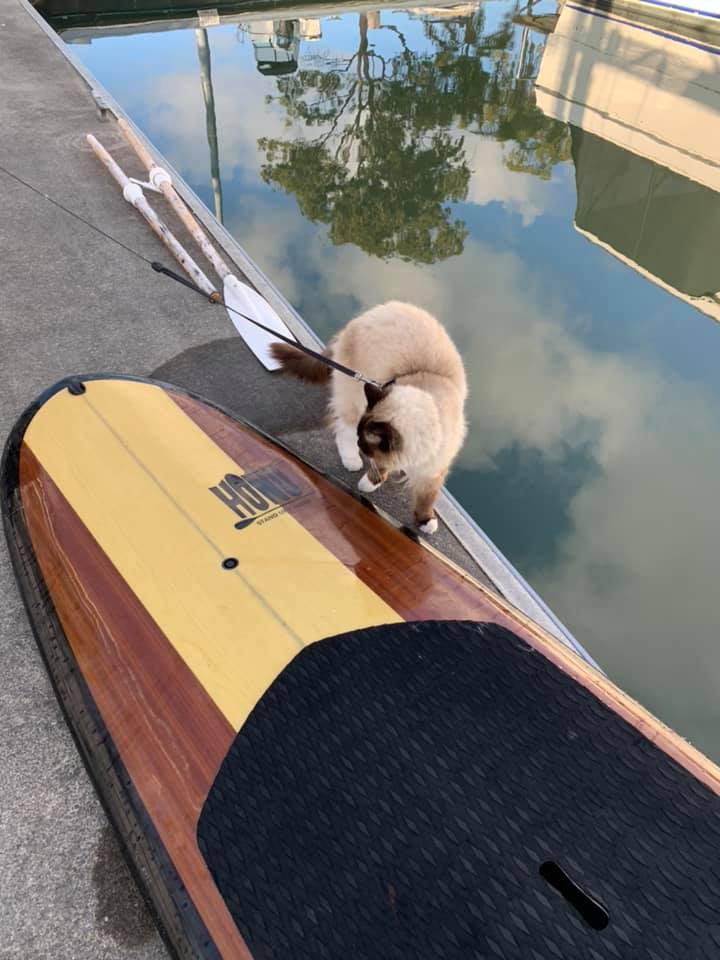
About a week later we went into Horizon Shores Marina and met my bro and kids for dinner. He brought my new toy to me… Happy days. I looked at her and smiled. Zac investigated and the dogs immediately jumped on her.

Welcome to your new family Bella-B.
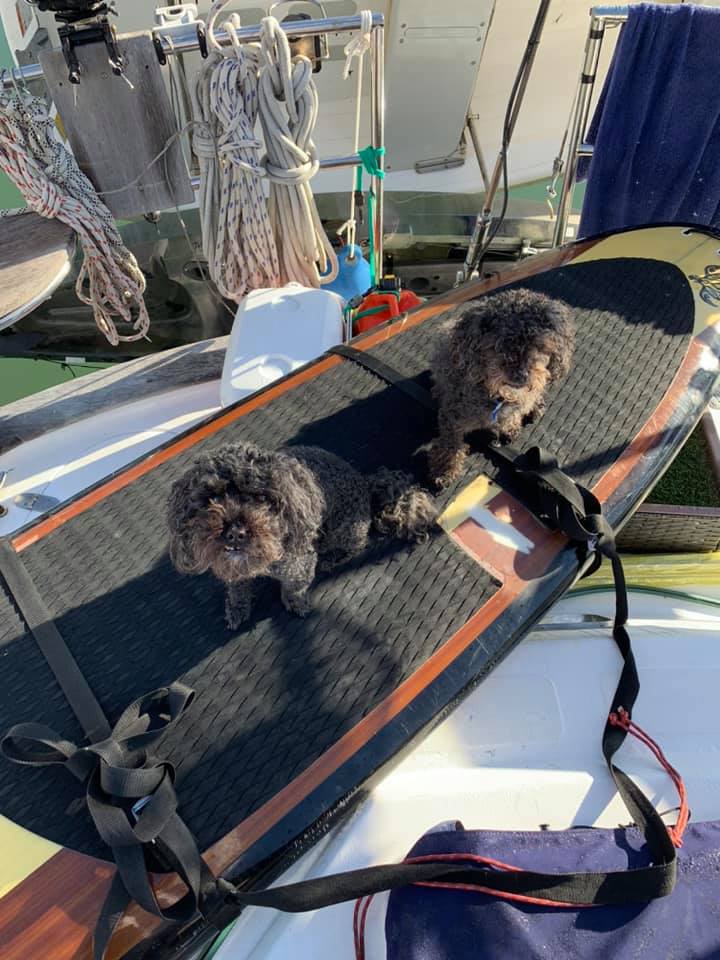
Over the next few weeks she sat in a few different locations on our boat while we worked out where her new home was going to be. Unfortunately the weather was against a calm first paddle. I wanted Martin to be handy with the dinghy, well just in case… Fingers crossed the weather would be favourable soon. Martin was getting annoyed about stepping around her on the deck (he has big feet that get in his own way sometimes) and we invested in racks to mount her on the outside of the stauntions.

I looked and wondered a bit, quietly hoping I would fall in love with stand-up paddling.

My first paddle was off Russell Island on slack water with straps secured around the board, front and back. Why? There are two reasons, the first it will slow the board down in the water. Not a bad idea while I gain my balance. A trick I learnt from my friend Bruce who patiently tried to teach me to paddle a K1 kayak (Olympic class). Who was I kidding? But I had heaps of fun trying. Who does not love a swim in the Noosa river? The second purpose the straps served was to enable me to secure another line to the board and hoist her back on the boat. Remember we are not at a marina finger, we are on anchor.

My first paddle was awkward, wobbly and slow.

If I am honest, too slow for my liking. I was missing the glide. That was probably because of the straps. It was still nice. Then the dogs wanted to be on the board. The paddle was even slower with two puppies on board. Nitro sat perfectly still in front of me and Moo, not so still behind me.

The second paddle was at Paradise Point, Gold Coast. I had this idea of doing my first Bridge to Bridge. What was I thinking? I still have my training wheels on (the straps) and two puppies. It was slow going from Saboteur north to the first bridge. It took ages against the current. I was not sure of my footing. And I turned, and the current was swift. Turning was interesting. I held my breath and wobbled and as I wobbled Nitro looked up at me and Moo moved around. Not helping Moo! I immediately gave up the idea of doing a bridge to bridge and turned my attention on how to get back on the boat. I realised the dinghy was not in the water and changing my centre of gravity enough to pick up the dogs and put them on the boat and hold on all at once was going to be challenge and I had forgotten to put the strap out to hold on to… As I approached the boat, I was hoping Martin would pop his head up on deck and help me. Relief, Martin popped his head up. Perfect timing.

And still, I did not fall in. 

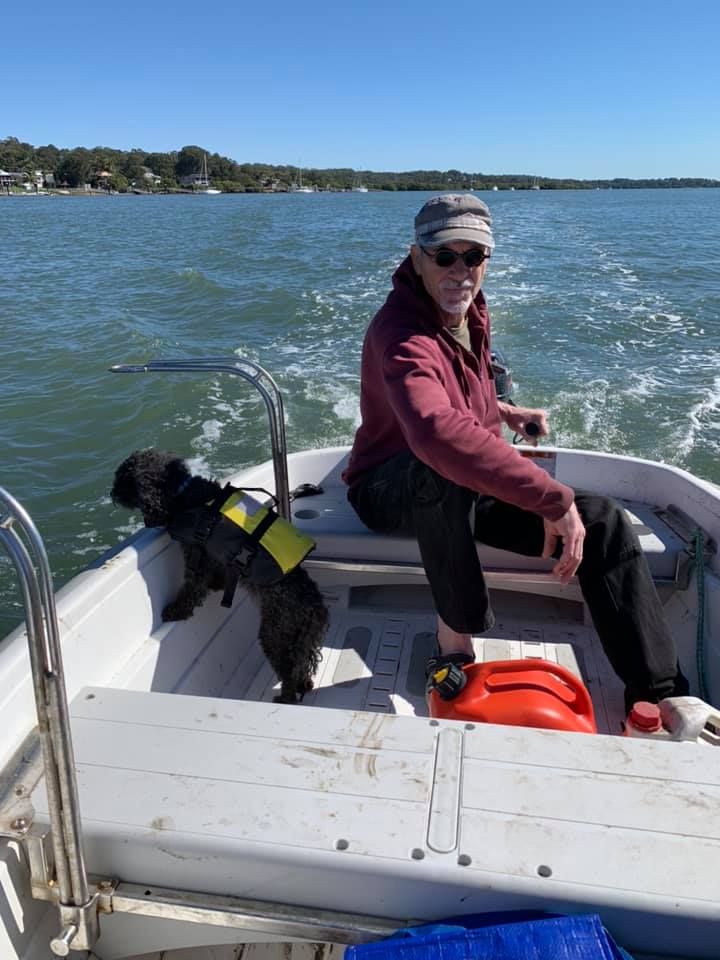
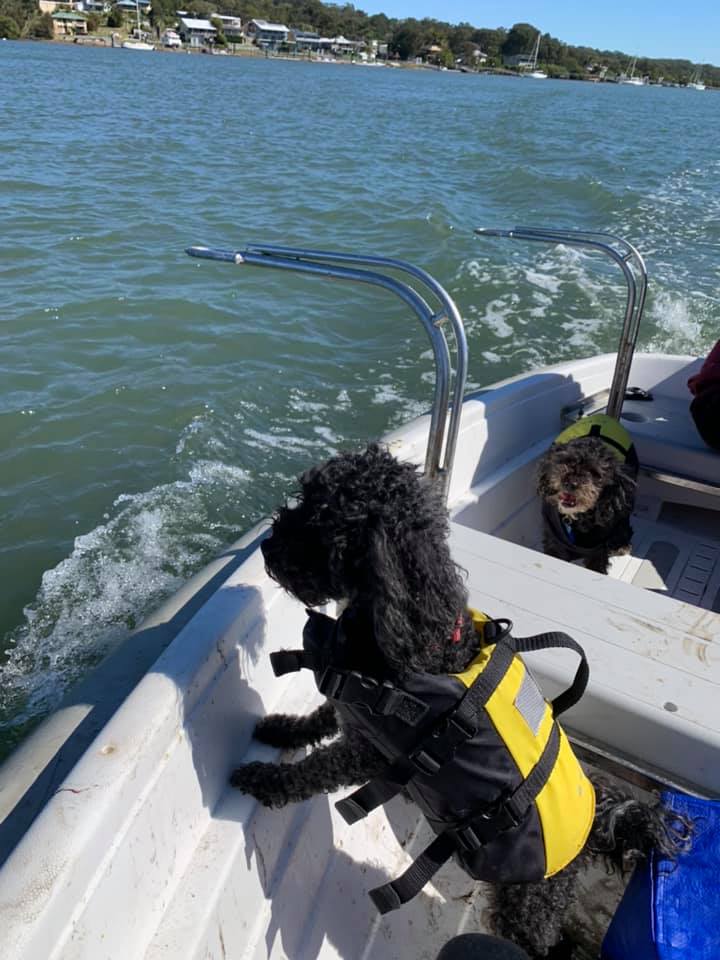
Now we have been at East Coast Marina Manly for a couple of weeks. The first week most days, I saw my friend Karen go past on her board. I am thinking ‘I really need to do this’. Finally, one morning she passed the corner and I went ‘bugger it, I’m doing it’. I put the board in the water (without straps) put the dog’s life jackets on them, grabbed the paddle and my ankle strap then tentatively stood on the board. I did not need to worry about putting the dogs on, they jumped aboard. Nitro first and then Moo, both claiming their spots.

The water was glass, the sun was rising, swifts (birds) were singing and we were gliding across a sprinkle of diamonds on the water. I went up the channel beside Saboteur. There were schools of fish here and there. I paddled down to the main gate and gingerly turned. Wow… survived another turn. Paddling back, this time along the shoreline, I saw two rays. I grinned from ear to ear. I was gradually gaining confidence. Before too long my feet were becoming numb. Particularly my toes. It is a thing with us stand-up paddle boarders. 

Since then this has become my morning routine. I have fallen in love with the glide. I have always loved the tranquillity of the early morning and the sun kissing the water.

Every morning I wonder, perhaps today is the day that I will fall in.

Now, it is important to do so as you need to know how to get back on. My ego prides myself in not falling off, my brain says I need to practice getting back on. Especially with two dogs to also get back on board.

So, Thursday morning, I went for my biggest paddle ever. I had departed East Coast Marina and ventured into Royal Queensland Yacht club. (Sounds more impressive than it is). And my feet started going numb. Bugger, I still had a way to go to get back to Saboteur.

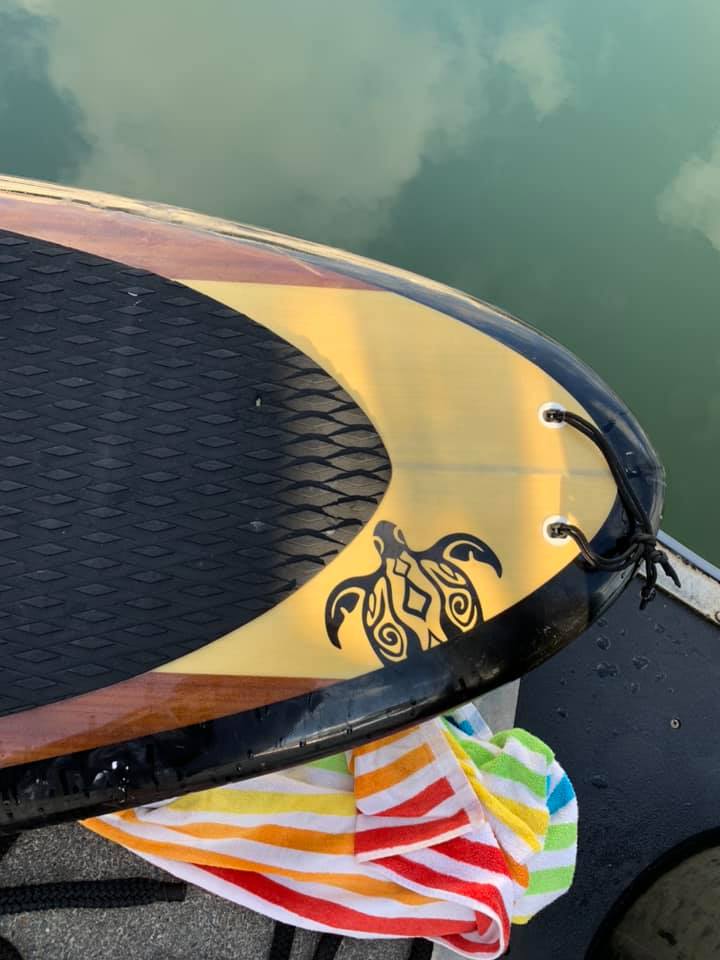
I turn to head for home and a turtle pops his head up out of the water and looks at me and the dogs who remain silent. My board has images of turtles on it. I grin… totally forgetting about my numb feet. I turn the board and drift with the turtle who disappears below the water. Hoping to see him again… I don’t understand why we can feel our feet when they go numb. Perhaps numb is not the right word.

I reluctantly turn to go back home.

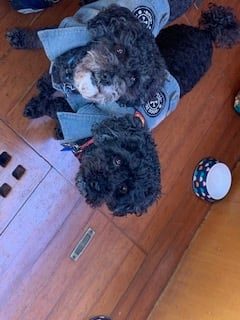
On the way back a lady on a marina finger smiles at the dogs and says oh they are so cute in the life jackets. She was wearing a one piece. I asked if she had been swimming at the local pool. And she said she had been to Chandler (a bigger pool). By this stage the board is virtually still and we are beside the finger. The dogs not wanting to miss out on attention from a human who is looking adoringly at them, jump off the board onto the finger. Nitro first followed by Moo. Great, this is going to be interesting. I start to wobble. I call the dogs. Moo jumps on behind me and Nitro in front of me. Nitro jumps on the front of the board where there is no traction pad. Only glossy fibreglass. It could only be described as the fastest tap dance ever followed by a roadrunner brake and a slow motion slide into the water. Meanwhile I attempt to stay upright. Nitro tries to get back on, all the while his claws and paws slipping on the fibreglass.

I carefully lean forward and grab the handle of his life jacket, lift him out of the water and lower him on to the traction pad. He shakes to get the excess water off himself and decides he really needs to sit down, for which I am grateful. I say goodbye to my new friend and head home hoping my feet will hold out. And they did…

So today was not ‘the’ day for me at least.

#sailingsaboteur #ilovesup
Tess prefers a gluten free diet. She isn’t celiac. But just like many people, she has an uncomfortable reaction to too much gluten in her diet. And so, I get to make gluten free bread, usually a white sandwich loaf or scones, pancakes, rock cakes etc. regularly.

She prefers my gluten free bread to the commercial varieties she has tried. Cool. Good husband…

No, I cannot take credit for the basic recipe I use. I have adapted one I found a few years ago. It comes from a lady named Shannon. She has a website www.alittleinsanity.com and has great recipes for those who want to avoid gluten, eggs, lactose etc.… Check her out if you are inclined in that (dietary) direction.

Her gluten free bread recipe is very heavy on sweetness, I believe she is in North America where sweet tasting breads are normal. The main change for our palette is to limit that sweetness. So, here is my version:

Note that I do not use an electric mixer. We live on a boat and that equipment is just not necessary or we learn to make do. However, that doesn’t mean you need to use muscle power if you have a well-equipped kitchen.

What we need:

Yeast Mix:

  • 1 cup water.
  • ½ cup milk.
  • 1 Tablespoon of runny honey or sugar (your choice white or brown).
  • 3 teaspoons of dry active yeast.

Dry Ingredients:

  • 3 Cups of Gluten Free Flour (I have used the cheapest standard available at our two main supermarkets in Australia. The recipe is quite forgiving).
  • 1.5 teaspoons Xanthan Gum.
  • 3 teaspoons baking powder.
  • 2 teaspoons table salt.

Wet Mix:

  • 2 teaspoons of apple cider or white vinegar.
  • 100ml olive oil.
  • 2 x 70g eggs.
The “how to” bit:

Get stuck in and prepare the main three areas (yeast mix, Dry ingredients and Wet mix) before doing anything else:

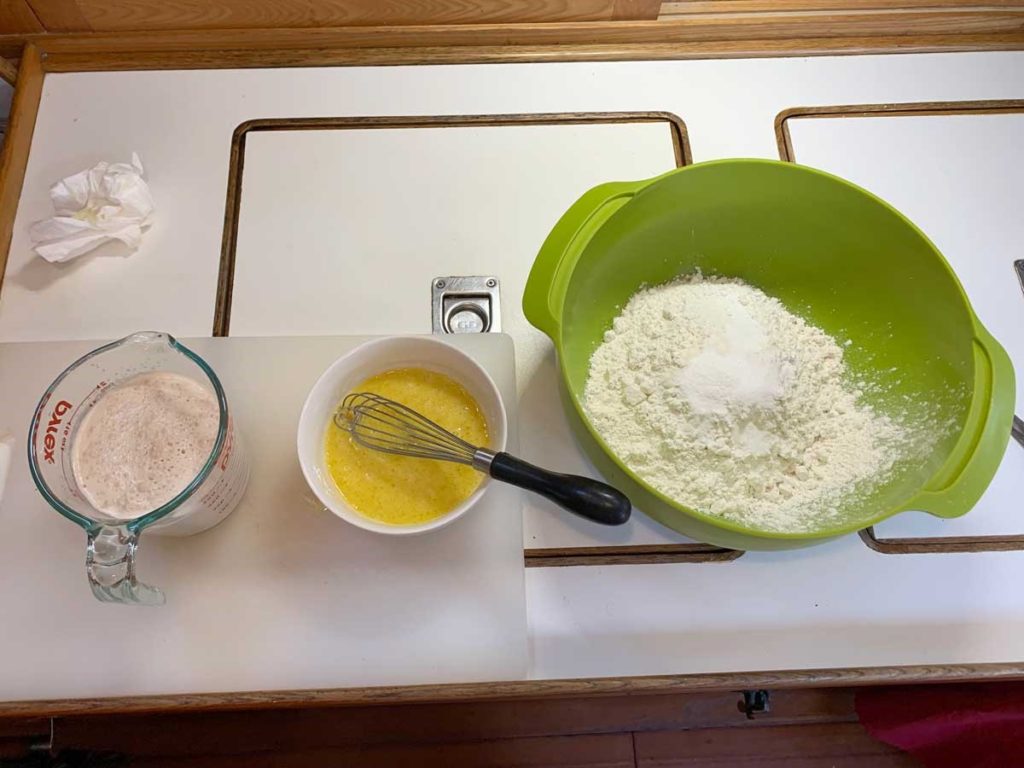
  1. Combine the yeast mix ingredients. I do this in a measuring jug to make it simpler. Make sure the water has been warmed beforehand so that the whole mix is comfortably warm. Not hot. Stir.
    1. This is important to do first as the yeast will need about 10 minutes to be activated. The mix will have a foamy head to it when its ready.
  2. Dry ingredients go into a bowl large enough to take the whole mixture. Put the flour in first, then any order will do. Give them a good stir to combine.
  3. Put the wet mix ingredients into a bowl and whisk to thoroughly combine them (The bowl in the photo was bit small, I should have used a larger one).
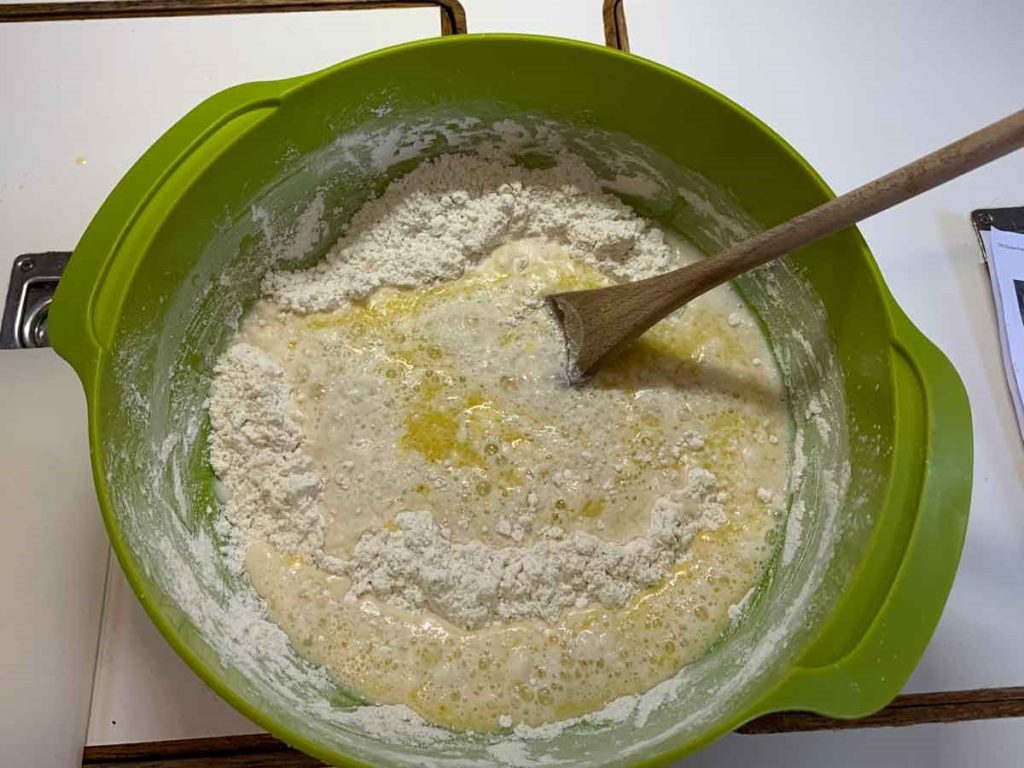
  4. After the yeast mix is ready, put both the wet and yeast mixes into the dry ingredients bowl and mix, mix, mix. I use a wooden spoon.

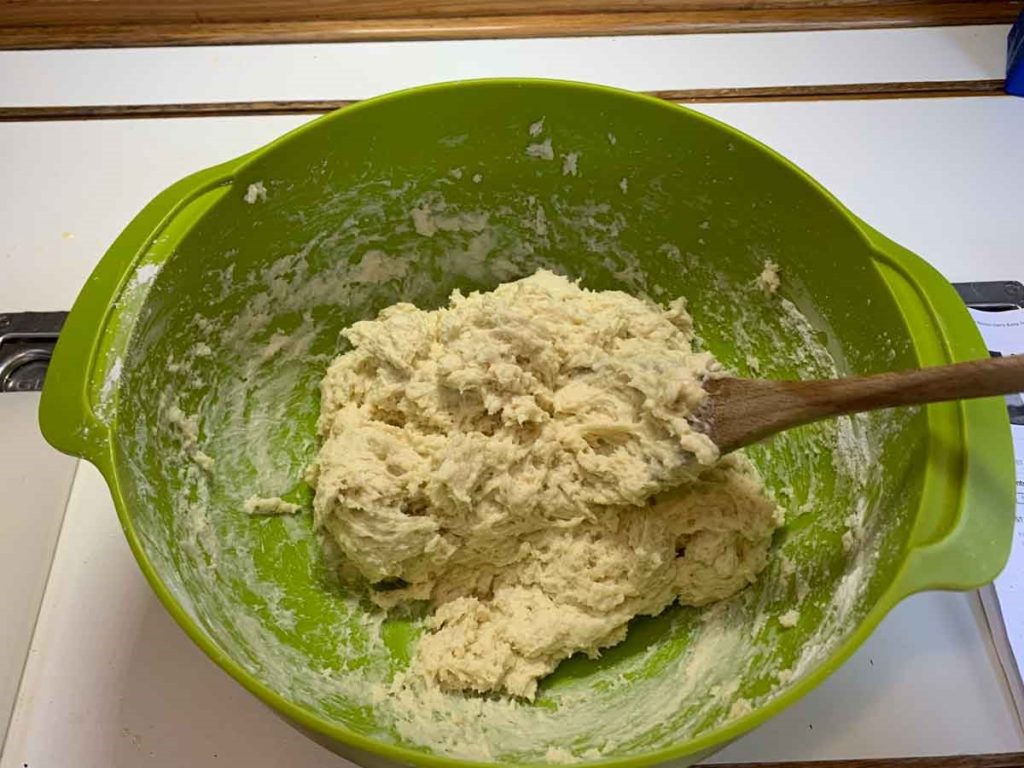
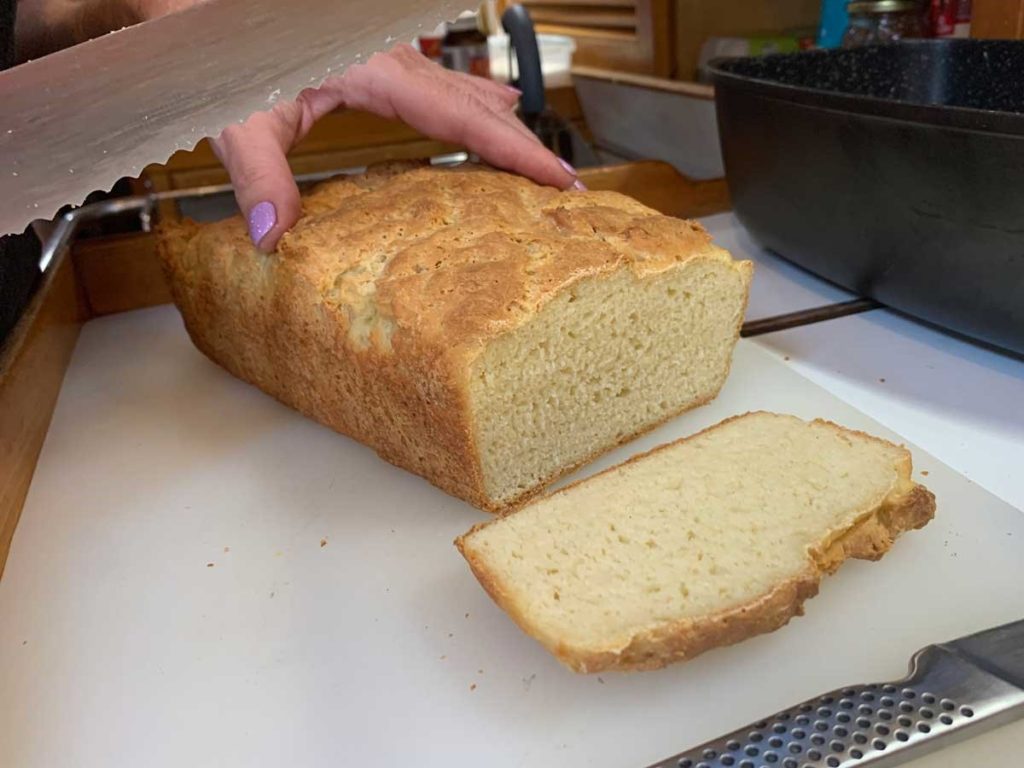
The mix will be much wetter than a standard bread dough. The photo below shows how this batch turned out. Slightly drier than I usually get. I could have added a bit more water but then this proves just how forgiving the recipe is.

  1. Prepare a bread tin. I line mine with baking paper for super easy removal when baked. To keep the paper there, I smear lightly with olive oil before placing the paper.
  2. Using a silicone spatula, I place the dough into the bread tin, then I even it out as best I can. This is not important as the dough will rise, fill the spaces and create the finished appearance.
  3. Cover the tin and leave in a warm place for approx. 30 minutes. Don’t let the dough rise above the bread tin sides as it doesn’t have enough body to hold that shape until cooked.
  4. Preheat the oven to approx. 190C – 200C. (Say 375 – 390F).
  5. Bake for 35 – 45 minutes. Shannon comments that if the crust is darkening too much too early, cover with some tinfoil for the last 10 minutes.
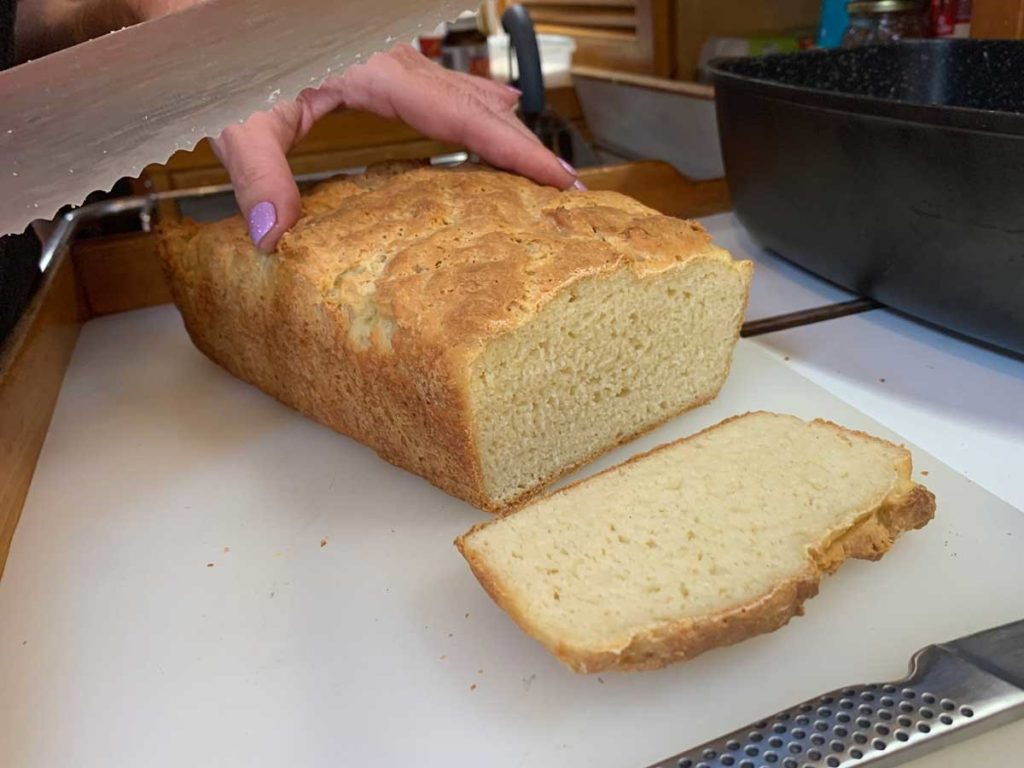
  6.  As soon as the bread is out of the oven, turn it out. BUT do allow it to cool before slicing. I know, I know. It’s irresistible. But just wait a moment and enjoy the aroma.
Our oven is a boat’s gas type and is not easy to find and hold a specific temperature. Never mind, the bread always works anyway.

But wait! There’s more!!

Last Easter Tess asked for an Easter loaf. Preferable a “brioche” style. I used the same basic recipe but with these changes:

  • The yeast mix had more milk, less water. Three tablespoons of brown sugar and a bit(?) of runny honey for good measure.
  • The dry mix had added copious amounts of Nutmeg and Cinnamon and (approximately) a cup of sultanas.
  • In the wet mix I first melted about 150g of butter to replace the oil.

It was awesome. Tasty, Fruity, Sweet, Buttery. Not a real brioche of course, but perfect just the same.

Life onboard Saboteur means we have to be handy and problem solve (without killing each other). This means we are doing many firsts.

In a week of firsts, this week is up there including, but not limited to, the first time:

• Saboteur was ‘beached as’… let’s not do that again any time soon!
• The dinghy donk (outboard motor) shear pin, well – sheared – as designed… if only we knew that than. (FYI it was because we hit a rock in the shallows).
• Our friend, Mitch Bradford ‘Macgyvered’ a bolt to replace the pin… our donk was working again. Massive thanks Mitch and relief we are not up for a new motor. Mental note, we have to buy a new pin…
• We docked at Runaway Bay Marina, with Marty berthing brilliantly in the tightest spot we have ever parked in
• We docked at Sanctuary Cove Marina in the biggest berth we have ever had… nice.

There is a particular first I wish to talk about.

I skippered Saboteur out of Sanctuary Cove Marina. So far Marty (aka Martin Lloyd) has done all the docking.

After all, being a back seat driver is much easier that trying to manoeuvre a 20 tonne vessel that will not steer in reverse. Much swearing and cursing and the occasionally bouncing and fending off boats have occurred in the past. We are constantly improving our skills; my skills with the boat hook have been less called upon as my line throwing skills have improved, that is if there is someone to catch it and tie us off. And now my ability to simply step off as Marty glides the boat into berth as a pro. Likewise Marty’s skills at reading the wind speed, the current and the space we have to manoeuvre have all excelled.

Many an experienced skipper says the most stressful thing about sailing is casting off and docking. I have to agree.

I knew the day would come and on Sunday evening Marty asked me, ‘Why don’t you take us off the dock tomorrow?’ I replied, ‘Sure.’ I had been thinking the same thing myself. I knew I had to do this.

After all what could go wrong?

And so Monday came and we had planned to leave about midday on high tide. High and low tides are the best times to depart and dock because it is the time the current is as close to still as possible as it changes direction.

I went for a walk to the amenities block before we left. On my way back, I set about taking in my surrounds, where will the wind blow us once we release the mooring lines? We had three lines holding us. What could go wrong?

We finished off a few last minute tasks:

• Put the hose way once the water tanks were topped up
• Put the dogs in the life jackets and clipped them into the safety lines in the cock pit
• Put Zac on his lead.

The moment was getting closer…

Back to thinking about our departure. I had two options.

Option one, to reverse and turn as soon as I could turn and not hit the neighbouring vessel in the pen beside me.

Option two, to reverse straight for about 50 meters and turn after I had passed the fuel dock and not back into the mega super yachts.

Now where we were, there are many super yachts that are worth millions and millions. I can’t fathom how much some of them are worth.

We knew it was slack tide, we rechecked the winds. They were coming from the south, so unless it changed it should just blow us straight off. Perfect.

I check the rudder was straight and we discussed the order in which we would release the lines. Agreed.

We discussed reversing options one and two. We went for option one. It would give us more control of Saboteur more quickly.

And so the moment was on us.

I started the engine. Marty turned the engine blower (to blow the hot air out of the engine) and the anchor winch on. We were not travelling far, so it was ok to turn it on now, and it is a good back up if you lose control; you drop the anchor before doing damage to others, the fuel dock and yourselves.

OK, we were in neutral, Marty was on the finger and released the bow port mooring line.

When releasing lines, we can set them up so that they are lassoed on the finger and you can slip them from the boat.

Alternatively, you can release them on the finger and then jump on the boat.

My biggest concern if we did the later was that:

• the boat would drift away from the finger or
• with my dyslexia I would steer the boat in the wrong direction (away from the finger) or
• I would use the bow thruster and push the boat away from the finger
• And struggle to get it back, leaving Marty on the finger and me out of control with a 20 tonne boat.

The winds were perfect to hold us on the finger, so it was ok for Marty to release the lines from the finger. There was a lot of trust in my skills here.

As I write this I am reminded of when we did our International Day Skipper’s course. To pass, we had to be able to successfully dock the sailing school’s boat. I always went first, otherwise I would either forget what they had told us or start to stress as I waited for my turn. I could then relax.

We had to dock at a fuel dock, on the end of a T, coming up behind another boat and reverse park into a berth. Marty told me later, he was worried for me as I can get my left and rights back to front, especially in reverse. FYI, I nailed it then.

I had not docked since that Day Skipper’s course which was July 2018. It felt like forever.

And so, with the engines going, I changed from neutral to reverse and put about 700 revs on. Marty released the port bow line and threw it onto the boat. The boat was barely moving. Marty released the starboard line and I put another 1000 revs on. Remember, 20 tonnes is slow to gain momentum. Marty walked to the stern line which was mid-ships, released the line and walked back with the boat as she made her way backwards. I was a little too close to the finger, and the fenders were threatening to jump up. I touched the bower thruster.

Marty jumped back on board, told me I was clear to turn, and so I turned the boat using the bow thruster; once, twice and she turned in her body length. I dropped the revs and went from reverse through neutral and into forward gear, and put the revs on. I turned to port (left) as I was little close to the end of the fingers and the bows of some of these super yachts. (Because of my super tight turn). Nothing to worry about because the winds were pushing us away.

And with a big grin on my face, I took us out of the marina. It was massive relief to have finished another first. It was 12.06 pm.

Meanwhile, Marty went downstairs, put the groceries away, and hung out the washing. He finished and came upstairs with a perfect cup of tea, kissed me on the cheek and told me again how cool I am. We were both enjoying the moment. Marty snoozed in the cockpit, the puppies snuggled up and I skippered us to the magic of South Stradbroke Island feeling deeply calm and happy.

‘We are as beached as’, I said to myself. I turned to see Marty’s (aka Martin Lloyd) reaction. Stressed was the first word that came to mind.

Six hours earlier…

I awoke to a lovely morning. The bird song was calling me to rise. I quickly made a cuppa in my travel mug, grabbed the dogs, their life jackets, my iPhone and jumped on my kayak to go for a paddle. It was lovely high tide, about 20 degrees C and perfect conditions to go up the Foxwell Island inlet to Jackson’s place. A beautiful spot where our friend Daniel Cooke buried his dog Jackson.

We had a magical, chilled paddle which I captured on a Facebook live post… We paddled and drifted, and I answered questions as they popped up on the live post and sipped my tea. It was bliss. All too soon, it was time to head back to the boat.

4.5 hours earlier…

I was back on the boat, and our friend ‘Jazzy’ phoned saying she would be there in 45 minutes for a coffee. I grinned. We had not seen Jazzy in about a month. We love hanging out. Time to wake Marty. I turned and looked out the cockpit. ‘Interesting; the land was a little close… I went up upstairs, too close, I felt a slight roll, turned on the instruments and waited for the depth to come live. It was 0.0… still waiting… It flashed 0.1m meters… and flashed back to 0.0. Shiver me timbers, we were touching the bottom and it was not yet low tide.

We were not yet ‘beached as’…

I started the engine, woke Marty, he threw on some clothes and we set about finding a deeper spot. We checked the wind, it was going to pick up and they were strong gusting northerlies. We decided the passage opposite Santa Barbara Park for better shelter. As we motored around the corner, we realised everyone else had the same idea and were there before us.

We turned and headed back. Saboteur is solid, she is heavy in the water and in rough conditions we can barely feel it. We both did the calc’s. How much longer did we have before low tide (it was going to be super low (0.2m))? At what time and how much further would the water drop? We both came up with the same answer. (This rarely happens). Our calculations told us that we needed to anchor with .7 meters of water under us and we would be fine.

We found the spot a little further into the deeper water of the channel than where we were previously. Ping, I received a text from Jazzy, she was at the café. We jumped in the dinghy and headed in. Had a lovely breakfast at the @Quarterdeck Kitchen & Bar.  Seriously good.

3 hours earlier…

We said goodbye to Jazzy. We did a visual check on Saboteur and we thought she might be touching the bottom, but we were not worried. The bottom is soft sand and we were already at low tide. Saboteur has a solid keel and a full skeg protecting the rudder. And touching a soft bottom occasionally is par for the course in the Moreton bay area.

So anyway, we jumped in the car. We headed to the Dive Warehouse where I grabbed myself my snorkelling gear. Happy dance.

All in all, it had been a lovely morning.

We headed back to the boat, parked the car and jumped in the dinghy and around the corner…

‘Beached as….’

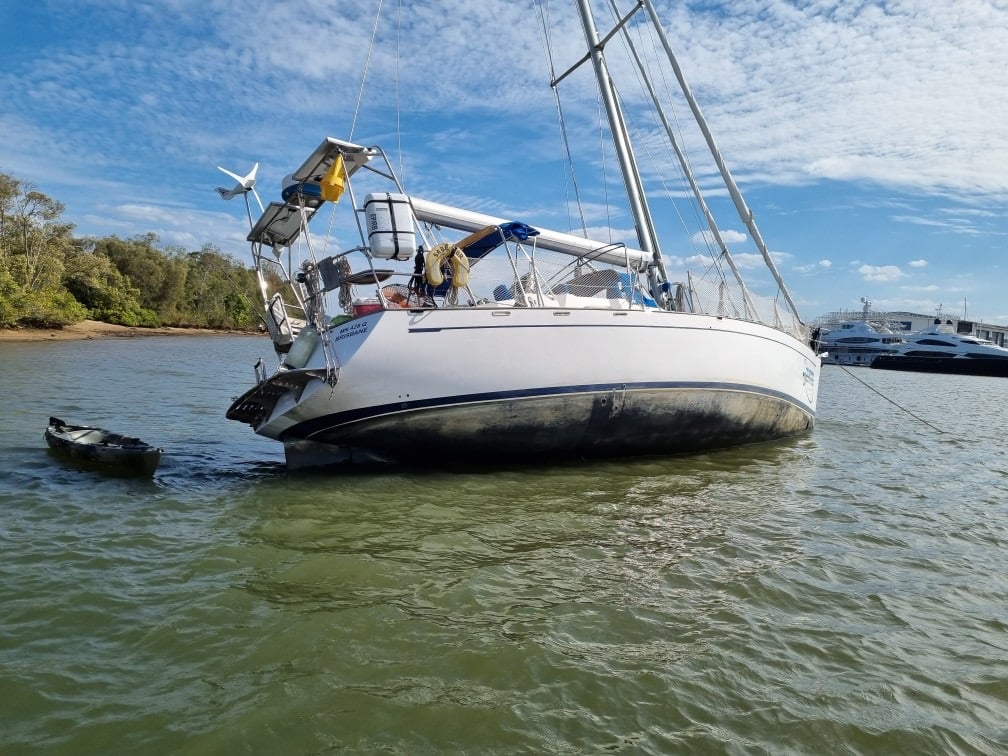
Oh my God we were ‘beached as’.  Seriously ‘beached as’.
The moment we found out we were 'Beached as'

We saw a dinghy circling our boat. It turned out it was our friends, Steve and Jane who were taking photos to send to us. It would appear that we had our calc’s wrong, but how? We would work that out later. Our subsequent discussion revealed how. Jane said low tide was 10 minutes ago. It couldn’t be… and with that we realised that we had done our calc’s on the wrong tide data. We had calculated on the mouth of the Coomera river not the end of it… Easy mistake.

Our baby was looking like a beached whale. We were seriously beached as. She was at 30-40 degrees. I said to Marty let’s go back to the café. There really was not much we could do until the tide turned.

As we pulled up at the café in the dinghy we hit our propeller prop. Bugger. Martin decided to go back to the boat and put the fresh meat we had bought in the fridge and come back. The dinghy outboard was now useless with the prop free-wheeling. He pulled out the oars and rowed. He shouted as he passed, ‘order me a coffee.’ I went to the café, ordered him the largest flat white they had and me a glass of house red. I figured I needed it. Marty returned, and told me about the mess in the boat… All things considered it was not too bad.

I sipped my wine, while Marty sipped his coffee.

We saw our mast slightly starting to rise. Maybe 25-30 degrees now. It was time to head back to the boat. The challenge was that with the rising tide and the strong winds, they had pushed Saboteur further into the shallows. While we were away, the wind had turned the boat against the current as it slackened at low tide, and by then both the wind and the incoming current had conspired to push Saboteur further ashore.

First decision: We had to put the second anchor out to stop us from being pushed further onto the shallows. The anchor line was securely attached in the anchor locker and we manually feed the entire chain and line out, carried it around to the beam of the boat and secured it to a cleat.

Marty jumped in the dinghy (remember, we had no outboard motor) and rowed from the swim board into the current, then grabbed the side of the boat. I lowered the anchor to him followed by the chain and the warp (line). He rowed the boat out as far as he could and dropped the anchor.

He rowed back, secured the dinghy and climbed back on board via the swim deck and back into the cockpit. We took up the slack of the second anchor warp around the starboard sheet winch. We put a good amount of tension to that anchor to prevent the boat being pushed further ashore.

And so our ‘beached as’ afternoon settled down…

We were able to gradually regain control of Saboteur by taking up the slack on both anchors with the rising tide. I grabbed some red wine and Marty put on Talking Heads, ‘On the road to nowhere.’ And we sang, danced and laughed the afternoon away. When we were close to level again and we could start the clean-up.

When we were off the bottom, we moved the boat for the third time that day.

We were truly happy to have rescued ourselves from being ‘beached as’ and having mastered using two anchors to get out of trouble.

A crazy afternoon but we were happy… now we had to get organised, as we had guests coming for dinner…

Bob, the dinghy and mudflats…

Yesterday, we (Martin Lloyd and I) had to right a capsized dinghy… yes, Diann Richards and John Richards before you have a heart attack, it was not ours. It was a neighbour’s dinghy.

Here’s how the day unfolded.

We left the calm waters and safety of Horizon Shores Marina just after high tide to head back to an old favourite anchorage just off the south of Russell Island. We travelled with the current and made good time of our voyage.

We were anticipating northerly winds, strong gusts and a brief squall. We decided to anchor at Perry’s Hole (about 40 minutes from our destination) as it would offer better shelter from the pending winds.

From there, we found a spot, dropped anchor and settled in. I was writing and Martin was catching up on the MotoGP between copy editing for me.

The wind was picking up and the boat was leaning. At all times she felt safe. Martin would pop his head into the cockpit every now and again to check. A houseboat had anchored close to us. Too close for comfort. And directly in the line of the prevailing winds. This meant that if their anchor slips, they were more than likely going to hit us. Martin put his jacket on and stayed in the cockpit to monitor. It had started to rain and the squall arrived. Sure enough, within a couple of minutes they were getting very close.

Martin gave them a friendly horn warning to which they turned on their engine raised their anchor and moved forward. They appeared to drop anchor again just ahead of us. Still in line with the prevailing winds. Martin gave them another horn blast this time accompanied with arms gestures to move along the channel. They raised the anchor again and moved as requested.

Happy with the distance and feeling safe, we settled down to wait out the weather.

Martin continually checking their position. Next thing you know their dinghy was upside down and they were trying to secure it onto their boarding platform. They were struggling. Martin lowered our dinghy, put the motor on and headed over to give them a hand returning about 30 minutes later advising their dinghy was secured and we were to go back on low tide (slack water) and try to help them right it.

In the meantime, we fell back into our respective activities.

The winds dropped and slack tide was close, we jumped in our dinghy and we both went over. More hands make light work as they say.

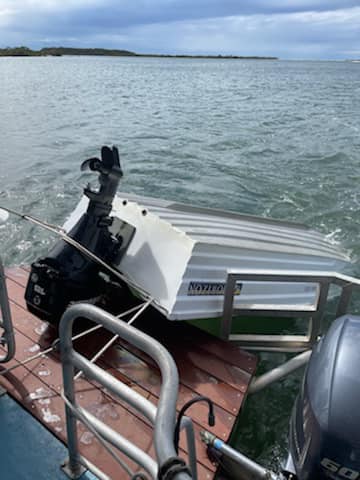
Picture this, their dinghy is upside down, bow (nose) in the water, stern (back) on the deck sitting on the engine and secured by a long rope. It is a 3.5m horizon dinghy designed for flat water. This means the hull is relatively flat and so in rough water it can slap on the water surface. This noise can be quite loud. The owners had turned the dinghy around to stop the slapping sound. When they moved the houseboat, they had not turned it back around and were towing it backwards, causing it to fill with water and flip. Bare in mind, it has a 15 horsepower motor on the back. That is pretty heavy.

Us 4 amigos set about trying to work out how to flip this damn dinghy. We tried many ways to pivot and rotate the dinghy from the back of the deck with no luck. Finally, the decision was made to gently take the houseboat as close as possible to shore. Then, hopefully we could take the line that secured it from the back of the boat to shore and flip it on the beach.

It was a good plan.

The only problem was… the beach was a mixture of sand and mud. And so the fun began. Patrice expertly manoeuvred the boat about 2 meters from the shoreline and dropped anchor. The wind would swing the houseboat away from shore and the gentle swell would swing her back to shore. As we swung into the shore, I stripped off my trousers and stepped off the back deck into the shallows. At first the water was brisk to say the least. I held my breathe and soon forgot about the cold and had to focus on my feet sinking into the mud. I was ankle deep in mud. Wonderful! I wiggled my feet to ease them up and grinned at the squelching noise I was making as I started walking towards the shoreline. There is nothing quite like an unexpected adventure.

Martin and Paul were carefully untying the lines that secured the dinghy while the wind swung the houseboat away from the shore. We waited for the swell to bring it back in. Patrice passed the line to me and Martin and Paul stepped off the houseboat to come and join me.

The next 30 seconds or so was hilarious as they too joined the ministry of silly walks as each step their feet disappeared into the mud. They worked out how to find they own way through the mud and now there were three of us on shore. Patrice stayed on the boat just in case she had to raise the anchor and move the houseboat.

Firstly

We had to move our dinghy which was also tied to the back of the houseboat. Patrice undid it and threw me the line, I dragged it up the mud flat a little so that it was out of the way. Or kind of. We then had to secure the line to the bow of the dinghy and try and turn her around. Unfortunately, the upside-down motor is now acting like an anchor and feeling the side of the dinghy reveals that it is 15 or so centimetres into the mud. It is now like a giant suction cap and we can barely see much of the boat. We had to do something fast as the tide has turned and the water was gradually rising.

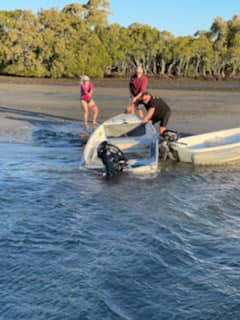
Paul and I managed to get both hands under the end of the dinghy (deep in the mud) and break the air seal and lift her. Martin pulled the line to turn the nose to shore then helped us. We are getting movement. We continue to lift. The dinghy edge is out of the water. We lift more. She turns over. Martin and Paul drag the dinghy as far up the mud as possible, which is not very far given that she is full of water. We now need to bail. We wait for the houseboat to swing back in, I step in our dinghy and grab the bucket that Patrice hands me, then step out of our dinghy into the mud and hand the bucket to Martin. He starts bailing.

We now have a good chance that Patrice and Paul will take their dinghy home.

It was Patrice’s dad’s dinghy. He passed away last year so it has sentimental value. Her dad was a seaman who worked on the trawlers. We have a discussion; I ask the question ‘does the dinghy have a name’? I believe Patrice said they just call it Bob. Martin quipped- ‘even upside down it is still Bob’. We all laughed.

While Martin is bailing, I walk the couple of meters to firmer ground being more sand less mud, turn to face the lowering sun, stretch my arms, hands and fingers wide, perhaps to try and warm up. I am getting cold. The mud itself was reasonably warm. Being in the wind my fingers were freezing. They were cold to the bone. Eventually most of the water is out of the Bob and we are able to, when the houseboat swung back in, pass the line to Patrice to tie up Bob the dinghy.

Martin and Paul jump in our dinghy, Martin got the motor going and motored around to the other side of the houseboat and secured our line. I waited once more for the houseboat to swing back into shore and stepped on board.

All on board, and two dinghy’s secured Patrice raised the anchor and we headed to a new anchoring spot for them.

Patrice offers us the shower. We decline. I sat on the deck and washed the mud off my legs, feet and hands in the salt water. Honestly the mud is lovely, and it feels good on my skin. Truth be known I love squelching it between my toes. After getting most of the mud off me, I accepted a towel, wrapped myself up, went inside and sat on the couch.

The sun was starting to set.

Patrice opened a lovely bottle of white wine, Paul cracked a beer and we sat and chatted for about an hour learning about our new friends. Patrice also shared the photos and video she took. I was glad as now I have photos to share. We had fun.

We said good night, I returned the towel and put my trousers back on and we returned to our boat. We were warmly greeted by our animals who demanded food.

As I reflect back on yesterday and our adventures, I smile. I love boating life. It is a great community. It was nice to be able to help someone else. We have received help from many others and so we were happy to be able to do the same.

We both slept well last night.

#sailingsaboteur #ilovesailing #getoutdoors #wearsunscreen #liveyourlife #whatareyouwaitingfor

Peak hour…

Where: On the verandah, Lindsay’s batch on Russell Island. The dogs are with us, sprawled out warming themselves in the morning sun.

Context: Marty (aka Martin Lloyd and I) are visiting Lindsay Hick.

Friday morning: Lindsay is leaning on the veranda railing, I’m in one of the comfy deck chairs. Lindsay and I sip our cuppa’s predominantly in silence. Marty is still catching up on some zzzz’s.

The various birds are chirping, screaming and squawking while nearby Kookaburras are laughing at some insider joke.

7.30 am

Lindsay: That’s the first car this morning…

Me: It’s magic.

8.15 am

Marty wakes up and I make him a coffee. He joins us on the deck. He is slow to wake…

8.30 am

Lindsey: That’s the second car this morning…

Marty: Is it Friday?

Lindsay: Yes.

Marty: Must be peak hour.

We all laugh.

Lindsay: He’s the local painter, heading to work.

Marty: That is the definition of peak hour, going to work.

The guys head to down the side of the house.

8.40 am

Another car goes past, with a friendly wave and a shout out, ‘Morning Lindsay’.

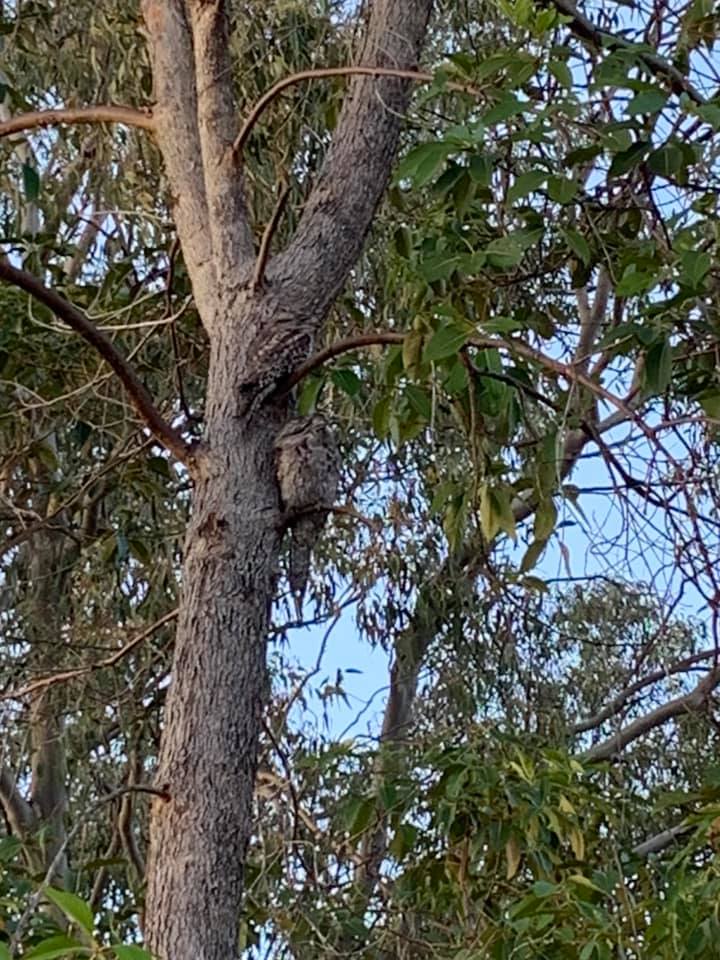
Gum trees and owl during peak hour

Me: I say to myself, yep definitely peak hour. I look at the clock, we have 20 minutes before we head back to the boat and peace away from the peak hour.

Thanks for having us for dinner Lindsay. Love hanging out with you.

#ilovesailing #getoutdoors #whatareyouwaitingfor #liveyourlife #sailingsaboteur

Ever wondered what happens when your propeller shaft disconnects from your gearbox?

No, me neither until last weekend.  This is our story…

Queue music, Freddie Mercury singing ‘Don’t stop me now (Because I am having a good time).’

We were excited for the day ahead. It was perfect sailing weather. We were planning to depart (more or less) the same time as some new friends, and to hang out with them off Fraser Island in the evening. This is one thing we love about sailing. The interesting people we meet along the way.

At approximately 11.15am we were raising our anchor with the intention of sailing from Tin Can Bay to Garry’s Anchorage off Fraser Island. To raise the anchor, it is best as a two-person job. One person at the bow of the boat who needs to step on the anchor button to raise the anchor at the same time as using their arms to indicate the direction of the anchor chain to the person at the helm. The helmsman steers the boat in the direction of the anchor chain while putting us into gear and gently nudging the boat forward.

I was at the bow waving my arms, nowhere near as precisely as the guys at the airport do when guiding the airplane pilots to their spots, but you get the idea. While Martin was steering the boat and nudging her forward. Only we were not moving forward – we had no gears. No forward, no neutral and no reverse.

Spirits still high, we drop the anchor again quickly. We are in shallow water with a running current and rising wind.  

Fade, ‘Don’t stop me now’…

Queue music: Freddie singing, ‘I want to be free’.

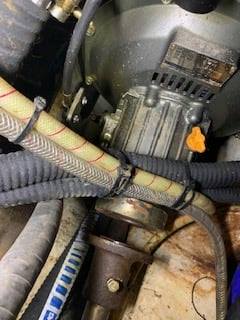
Once we were certain the anchor was secure, we headed downstairs to check out why we had no gears. Martin stuck his head in the cupboard door under the sink to investigate (the engine is located under the sink). His investigation revealed that the propeller shaft was disconnected from the gear box. There was about 5 cm of air between the two.

He explained this to me. I stuck my head in to check it out. Yes, nothing but air.

I observed Martin’s energy levels drop and felt my own enthusiasm wane.

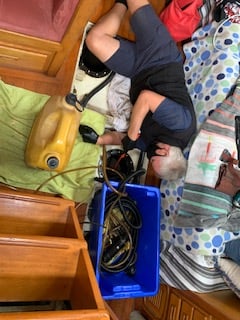
Gearbox and propeller shaft

We were baffled as to how this happened. After all it is a new engine with approximately a hundred hours on the clock. Peering in the engine compartment once more, I thought I saw a bolt thread lying on the floor. We grabbed our inspection camera and had a look. Yes, it is a bolt. I squeezed my body in over the engine, left elbow on the engine head and rotated my torso right to gain extension. I reached for the bolt with my fingertips, felt it. Bingo. I was able to grab it. I handed it to Martin. Went headfirst back into the engine compartment. I blindly felt around and found another bolt.

We thought these were the bolts that were holding the propeller shaft and gear box together. But apparently not. Martin attempted to reconnect them. As he did sea water starts rushing in through the prop shaft gland. We feel our plans slipping away.

Fade, ‘I want to break free’.

Queue Freddie singing, ‘Another one bites the dust (hey, it’s going to get to you)’.

Not good.

The bilge pump started up pumping hard. While we were not sinking (yet) we were not sure if the bilge pump was keeping up. We are both covered in grease. I absentmindedly grabbed a tea towel to wipe my hands. Damn, I did a Martin, I am annoyed every time he uses a tea towel instead of a paper towel. This time I did it… You have to laugh… And be kind to each other.

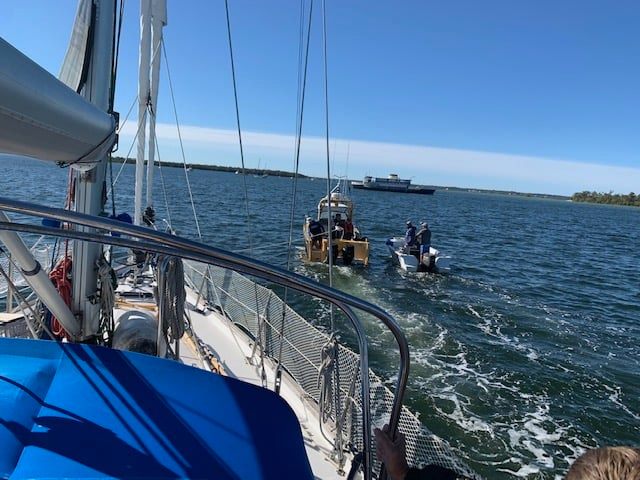
We started working through our options. Martin phoned the Tin Can Bay Marine Rescue. After a chat and exploring various options, they headed out to us with an extra pump ‘just in case’. Meanwhile we were all working on the plan as to what we are actually going to do. It was a bit of a blur. They suggested we get in touch with the Tin Can Bay Marina to see if they have room for us and can haul us out if we can’t stop the water ingress. And to see if they could also assist with finding a shipwright or mechanic to ensure the water stops coming in.

Fade, ‘Another one bites the dust’.

Queue Freddie singing, ‘Somebody to love (can anyone find me… someone to love)’   

By the time Marine Rescue had arrived, so had the Marina crew. Perfect, we are feeling the love now. We were towed by the Marina rescue. I was on the helm. It was my job to keep the boat dead centre behind the rescue boat. Martin was doing an assortment of jobs in preparation for what lay ahead.

The coast guards and the marina crew were brilliant.

We spent the next 30 minutes being towed by the coast guard. As we neared the marina, the marina crew strapped their boat to our stern. On their instruction, the coast guard then dropped their line and peeled away. From there Andrew skillfully guided us into the marina fuel dock.

Just as we finished tying our lines to the deck, a guy, tanned, sporting some cool dreadlocks, wondered up to our boat. It was Greg the local shipwright. He was wearing working gear, a cool chunky silver chain and pendant, and his hands showed the evidence of his trade. He said hello and smiled.

After introductions he asked the customary question, ‘Permission to come on board?’ Absolutely, he soon disappeared headfirst into the engine compartment. It was a busy time. The fuel dock was crowded with our boat, the marina boat and the coast guard. We still had their extra pump and held on to it just in case. We said thank you and promised to deliver it back to them on Monday. Now we were waiting for Greg to inform us if he could stop the water or if we had to be hauled out straight away. The good news was our bilge pump was keeping up.

Greg reappeared in the cockpit. Decisions needed to be made. Could we stop the water ingress? Could we work out what has happened? Did we need to be hauled out? If so, would our boat fit on their haul out facility.

Fade, ‘Somebody to love’

Queue Freddie singing, ‘Under pressure (Pressure falling down on me, falling down on you)’.

The answers:
  • Could we stop the water ingress?
  • Greg was able to push the propeller shaft back against the gland and in doing so, stopped the water flowing in.

Q.   Could we work out what has happened?

A.   We discussed various options and came up with a few theories.

Q.  Did we need to be hauled out?

A.   Yes, we did.

Q.   Would our boat fit in the marina’s haul out facility?

A.   This took a little time to answer with Andrew (Haul-out Hardstand Manager) and Martin swapping boat dimensions and measuring bits and pieces to be certain. The facility is not really meant for boats our size. They have a small 30 tonne lift. It was decided. We would fit… It would be interesting and very close.

Finally, with the decision having been made that we needed to be hauled out, we now needed to decide when. Greg was happy that we had stopped taking water. This meant we could stay in the water until Monday, as we needed to access their 30 tonne lift at high tide.

We had a hitch and just learnt that when we are out of the water, we cannot stay on the boat. We now had to find a place to stay that would take us, plus our two dogs and a cat. David the Marina Manager phoned around and found an Air B&B that would take us. Brilliant. We could stay on the boat until Monday.

And so we could breathe a little and ponder… not sure what. Somewhere along the way we had contacted our friends who we were meeting at Garry’s Anchorage to tell them we would not make it and to turn on to channel 77 if they wanted to hear our dramas on the radio.

Being on the boat had its own challenges.

We were at the fuel dock which was fine, however we did not have access to shore power. We had to be economical with our power usage and keep the batteries charged. There was an issue as the lights were flickering indicating that there may be a short somewhere. More issues… We really don’t want to think about. But need to…

We had started raising the anchor at 11.15am. All our new friends (the marine rescue, the marina staff and Greg) had finally left at around 4 pm. Both of us had not had lunch and were super tired and hungry.

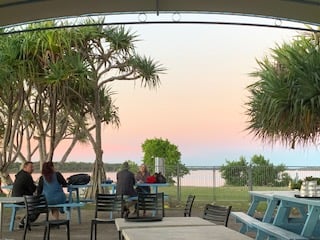
Sunset at the sailing club

We fed the cat and grabbed the dogs and put them on their leads and wandered down to the sailing club to eat. It was about 4.15 when we arrived. The kitchen was not going to be open until 5. We begged for something simple. Hot chips it was, and at 4.30 we were eating the best hot chips whilst watching a gorgeous sunset. We were sitting on the deck.

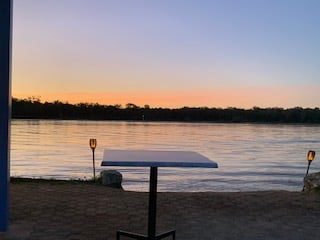
And the cool air settles as the sun goes down

As the sun lowered, we were cast in shade and it became suddenly very cool. Martin wondered back to the boat to grab a jacket. Five pm could not come around fast enough. We were grateful for all the support along with being stuck in such a beautiful location. We ordered a plate of Gnocchi to share and tried to stay awake and wandered back to the boat and passed out. Exhausted from the days adventure.

Fade, ‘Under pressure’

Queue Freddie singing, ‘The show must go on’

To be continued….

‘Get me out of here!’ I said to myself. Along with:

  • I hate sailing
  • I hate being cold
  • I hate being wet
  • Are we there yet?

I was seriously queasy. I asked Martin ‘How much longer?’ And he informs me that what we thought was going to be another three hours was likely to be another five. ‘Five, you have got to be kidding. I go downstairs and hope to throw up. It does not happen.

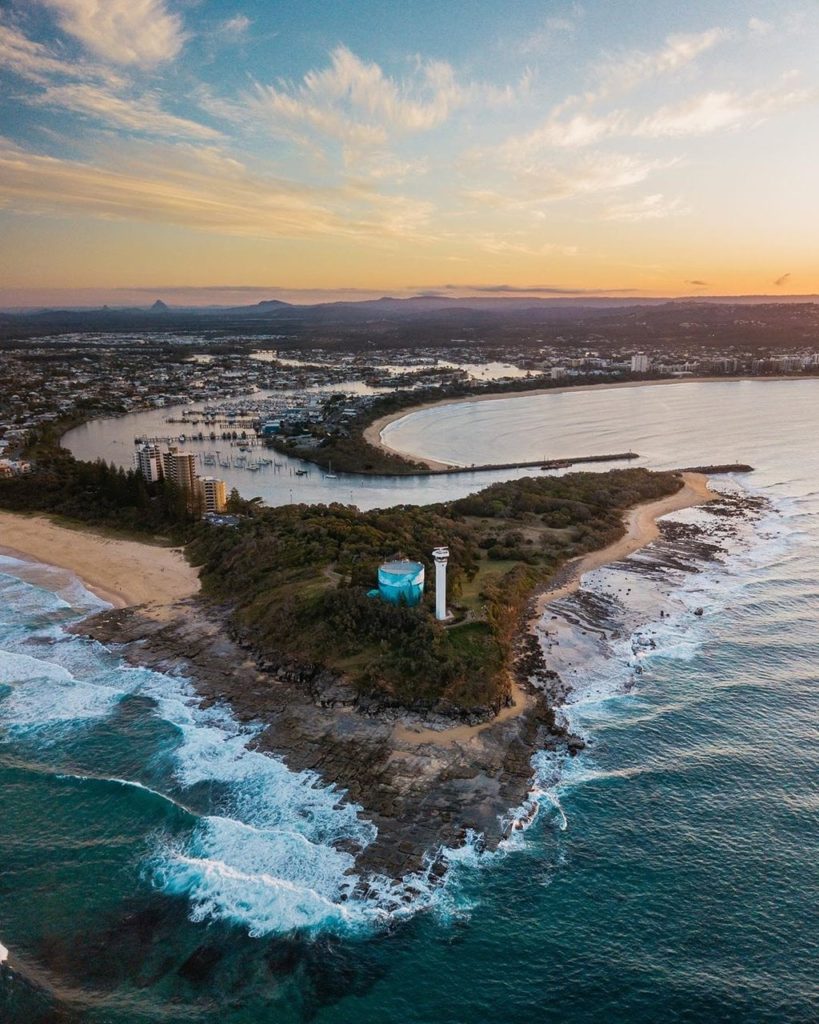
Captain Tessa crossing the Mooloolaba bar.

The day had started with me taking us off anchor and heading out of a relatively calm Mooloolaba bar. The coast guards have excellent instructions on how to cross to the bar. Thank you very much Mooloolaba coast guards. I completed my first bar crossing as skipper and was proud of myself.

I turn the boat to the open water with the plan of heading north east away from land to catch the South easterly breeze, then after about five hours turning west to sail into Double Island Point anchorage for the night. We put the headsail up first as the wind was from our starboard quarter. We were doing 6.5 knots. It was pretty good speed really. However, it was rough, rougher than expected. The swell was the size we expected however we could not comfortably sail in the direction we wanted.  We tried to trim the sails to make the passage more comfortable. Eventually the head sail came down and we put up the smaller staysail. More correctly Martin put the steering lock on and changed the sails. I was too sick.

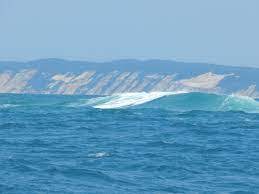
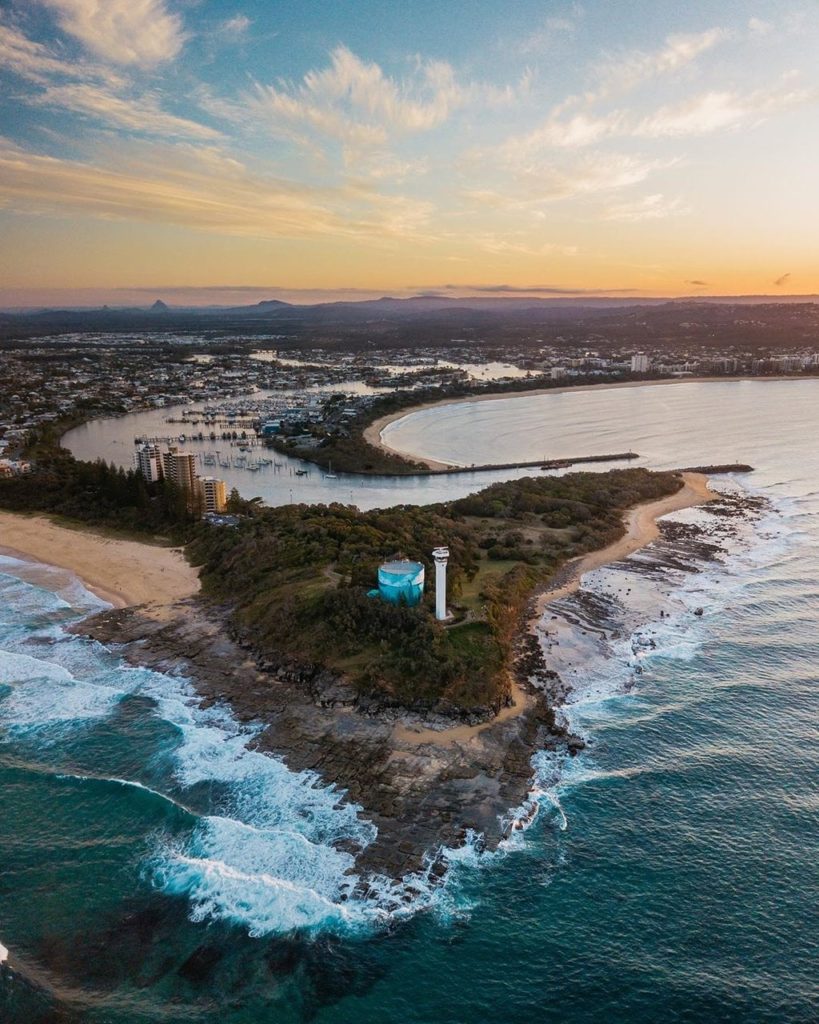
Mooloolaba Bar
We sailed in the same rough conditions for about 10 hours. I was queasy the whole time.

I was still saying to myself:

  • Get me out of here
  • I hate sailing
  • I hate being cold

Now I have added a few more things to the list:

  • When can I get of the boat, and
  • What do you mean with have another 3 hours of this. You have got to be kidding!!!

I spared myself from feeling guilty about not helping Martin as he had done the same trip a few weeks ago with a friend and he was sick the whole way. Sicker than me by all accounts. Meanwhile, I want to throw up and can’t. Martin is on the helm, auto pilot handling the conditions perfectly and Martin was leaning back reading his book on his phone. You have got to be kidding. He is quite pleased not to be sick this time. For that I am grateful.

After 11 hours after starting out, we finally anchored on the lee of Double Island point.

It is still lumpy rough. I go to bed without eating. Martin gives all the animals a light meal of dry food, just in case.

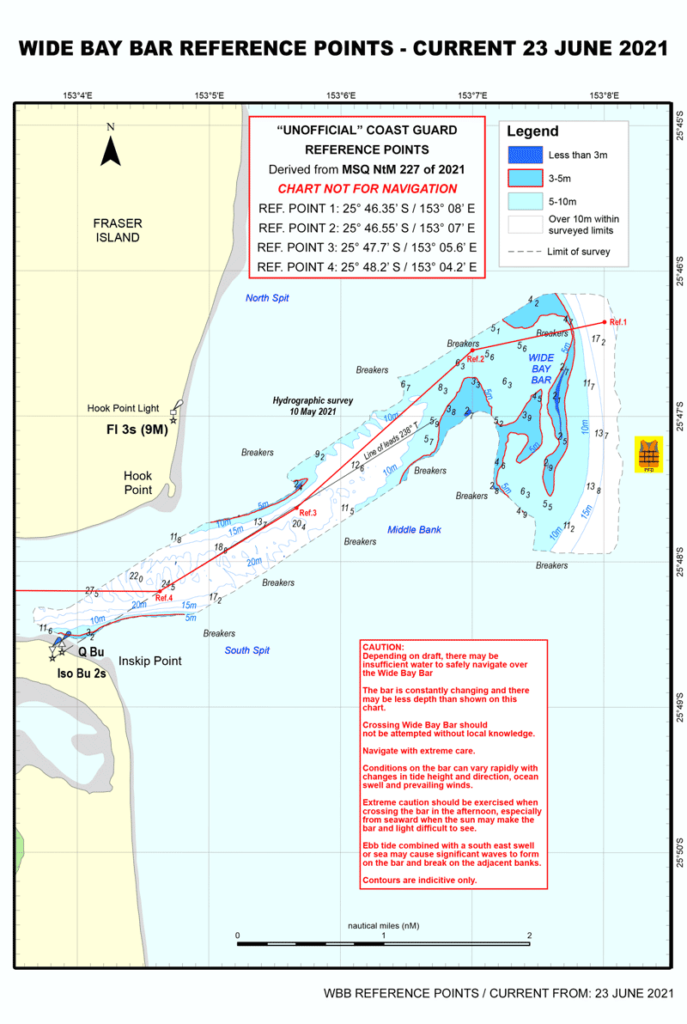
The following morning we arose and had a slow start. We miscalculated how long it would take to get to the Wide Bay Bar by an hour. We would be crossing an hour after the highest water. Not really a big problem. We checked the height of the swell and breakers with the Tin Can Bay coastguard. It is the Captains call. On paper it all seems OK. What could go wrong? (Nothing actually did – Martin).

We continue and make good time. I am still queasy. So again, all the work falls on Martin.

‘I still hate sailing, please get me out of here’

We make good time and have the approach into the Wide Bay Bar programmed into the nav system. It is a long approach. As we turn to approach the bay so does the swell turn to waves with breakers. We are constantly adjusting as the swell and waves want us to take a more direct route to shore. We had to stay on the waypoints to keep maximum depth underneath us. This was Martins job which he did brilliantly. While I had to watch the swell and breakers for particularly high ones we need to turn away from. We settled into a rhythm of working well together. Our boat Saboteur rose up, rode and surfed the swell and waves brilliantly.

Our boat was made for this.

It was exhilarating.

I love sailing.

Honestly, I do.

Yesterday and today, I am finding something else to do because the boat is not big enough. Yes, the boat is not big enough for Alex the diesel mechanic, Martin Lloyd and me. I have learnt that there is such thing as fuel polishing and tank scrubbing and that is happening on board at the moment. What does this involved, you ask? Like you, I did not know about any of this until last week.

When we learnt that someone else (more professional than us) could do the fuel polishing (filtering the rubbish out of the fuel, If possible) and tank scrubbing, it made us very, very happy. One of our fuel tanks has had seriously contaminated fuel. And this was a problem on our passage form Bribie (Bribie Island) to Mooloolaba.

After an awesome chill day and paddle at Bribie passage, the adventure unfolded.

On the 26th June at 3.50am, it was 15 degrees and drizzly. The cool and the dampness had not dampened our spirits as we set about getting ready to depart. I made coffees for Dan and Martin and a tea for myself, put the dog’s life jackets on them and strapped them into the jack straps (safety lines). Martin and Dan set about getting the boat ready.

We pulled up our anchor a touch after 4am in the morning. Why so early? Because we wanted to cross the Mooloolaba bar on high tide. We were planning to cross the bar around 10.30am.

At 4am there is barely a hint of light on the horizon and yet the night was relatively clear. Enough to see the navigation beacons. The beauty of the morning is magical and we travelled along more or less in silence as we started to see the sun wash the horizon with light and a little warmth. Dan and Martin saw a whale. I missed it.

We were barely out of the passage approximately 45 minutes later and the engine stopped. It didn’t restart. We were nose into the wind and the boat was rocking. Not the relaxing kind. More the pitching forward and backwards, rather unpleasantly.

Dan and Martin talked it through and started following the fuel line. We discovered that the primary engine filler was blocked. This is a white paper filter, and it was totally black. No problem, Dan used an empty wine bottle from the night before to drain the fuel out of the filter while Martin retrieved the spare. They replaced it, and Dan bled the air out of the line. This, in total, took about 45 minutes. The engine started perfectly. Off we went again.

Take two.

The passage was rough, we were nose into the wind and were pitching the whole way. Three hours later the engine stopped again. The replaced filter was black. Totally black. Now we had a problem. We didn’t have an another spare and needed to clean the filter. We do not have the right cleaning fluids and degreasers. Fortunately, we had plenty of methylated spirits, and it worked a treat. We cleaned the first filter as best we could and replaced it. About 40 minutes later, you guessed it the engine stopped again, and we had to clean the other filter. And so our journey went on, having to do this a total of 5 or 6 times.

This strategy was fine in the open water, however we could not afford to have the engine cut out crossing the bar. So, after a couple of conversations, Dan took the ‘phone a friend’ option. We had it on good advice that removing the primary filter would allow the fuel to flow. The secondary filter was doing a perfect job as well. We were able to cross the bar with confidence under power.

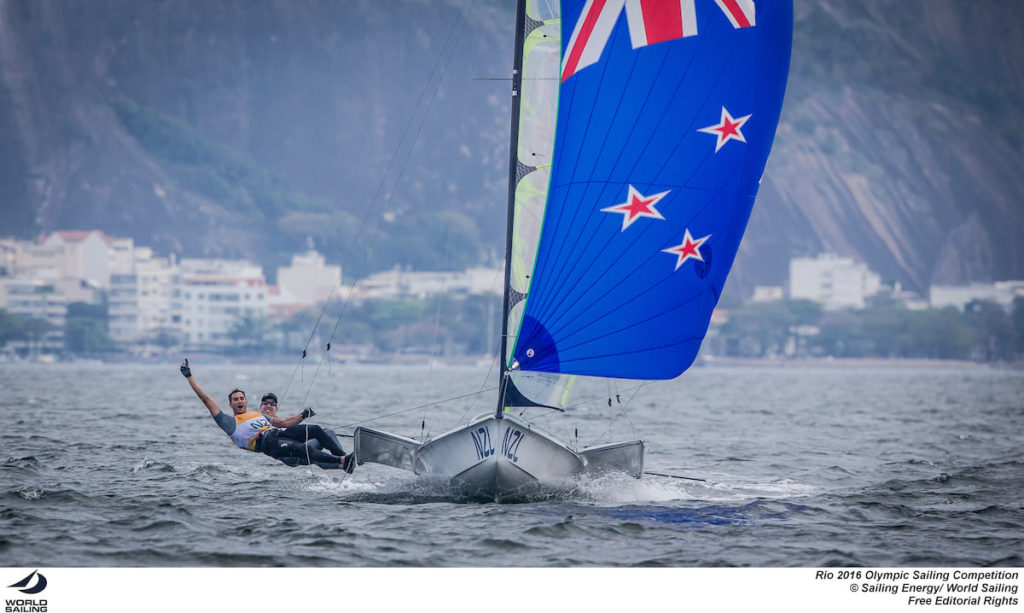
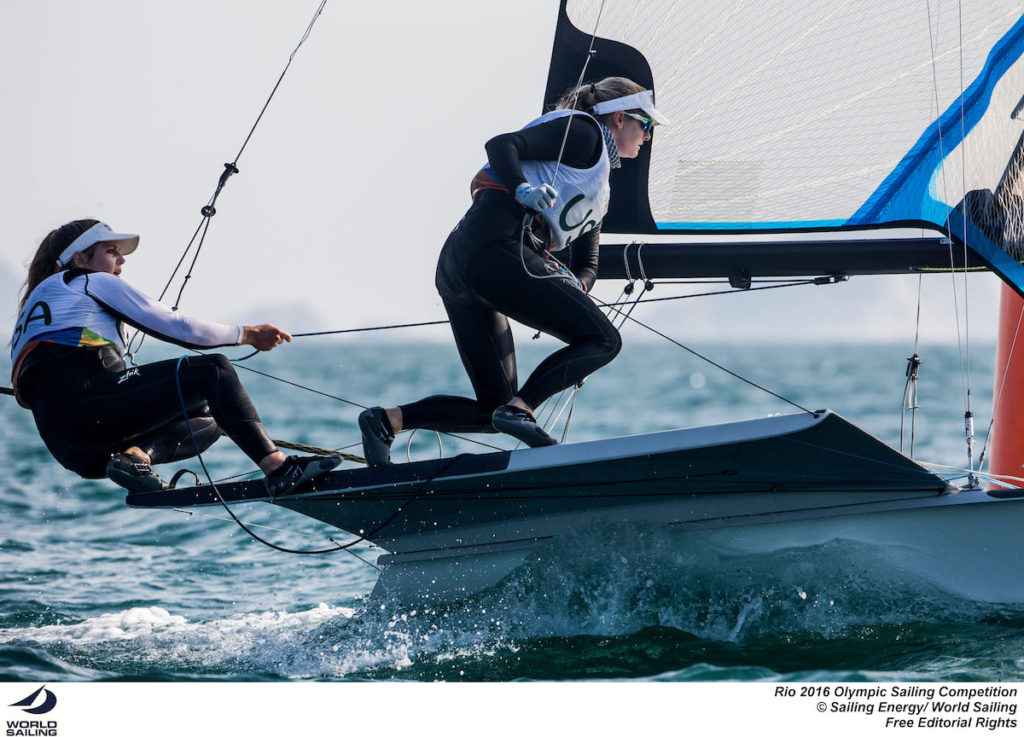
It was with great relief we did so. As we were crossing the bar, so were about a dozen Forty-niners (racing sail craft) who were training for the Olympics.

The next challenge we had was docking. Having not visited the Mooloolaba Marina Sunshine Coast before, we were uncertain how much space we would have. We were very grateful for the lovely wide space and open pens.

Martin docked perfectly and Dan and I were on the lines. It was the smoothest docking ever. I am in love with our new bow thruster. (A newest addition to the boat that has a small propeller in the bow to assist with turning the boat. Best investment ever!)

Massive thank you to Daniel Cooke for everything from electronics to fuel cleaning. To Michael Brook who came to visit for the weekend to escape Brissy and ended helped Dan empty the tanks and try to filter the fuel that was beyond recovery.

Finally, a massive thank you to Mooloolaba Coast Guard who stayed with us on radio over our 11 hour journey. We felt incredibly safe the entire trip.

Alex is still working on the boat. He is a professional and does not need me hanging around. As I said the boat is not big enough, so it’s time for me to take a beach walk.

#Ilovesailing #fuelpolishing #Tankscrubbing #getoutdoors #wearsunscreen #sailingsaboteur

What a day! Scoot scoot.

Life on a boat will soon mean life without a car, and motorbikes. While we are travelling for the next two weeks our vehicles are at my sisters place. On our return to Brisbane we will be saying good bye to them before heading off.

So now it is scoot scoot. And it is a blast.

Today was what I anticipate will be known as a typical kind of ‘scoot scoot’ day. The day consisted of a visit to the vet for Moo’s arthritis shot, then back to the boat to do some work. This was followed by a trip to two Chandlers, Best Friend (the pet store), a little more work, dinner and writing.

I was keen to get away early and I did not want to be late for the Vet. Also, I had not been there before and was worried at how long it would take to get there. Martin reassured me we will get there in 15 minutes. We travel at very different speeds. Leaving the boat took almost as much time as getting there. First, we forgot the dogs leads. Then we forgot our masks. Eventually we left the marina.

I was a little wobbly. It had a been about 4 weeks since I was on my scooter.

Martin on the other hand has been using his a lot. He has 250 kms on the clock, while I have about 70. And some of those Martin put on for me.

I was also cautious. It was the first longish trip we had done with the dogs in their carry pouches. At first they were a little unsettled. And yet, they did not complain. They are the perfect dogs.

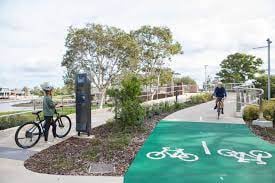
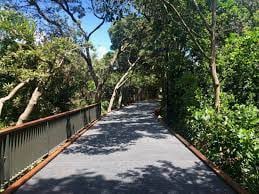
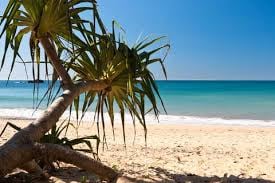
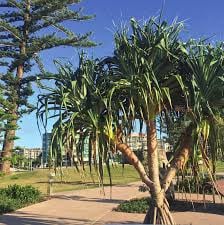
What I discovered between all our scoot scooting around Mooloolaba was that everywhere we went, there were designated bike paths. It was brilliant. It made me more relaxed and I could start to appreciate the beauty around me. The river and canals. The distinctive pandanus trees that always remind me that I am on the coast. My chill out zone.

On our second trip out this afternoon (sans dogs), I was relaxed and back into my groove. I was able to appreciate the fun of being in a new place and discovering new things. On the way back from the Chandlers, we stopped in at two dive shops. I am on the hunt for some snorkelling gear. I am keen to get back in the water. During the happy deviations, I discovered a snorkelling trip, ‘Swim with the whales’. The only one on offer in Australia, according to their marketing. I am curious.

Scoot, scoot, swim, swim…

Pin It