

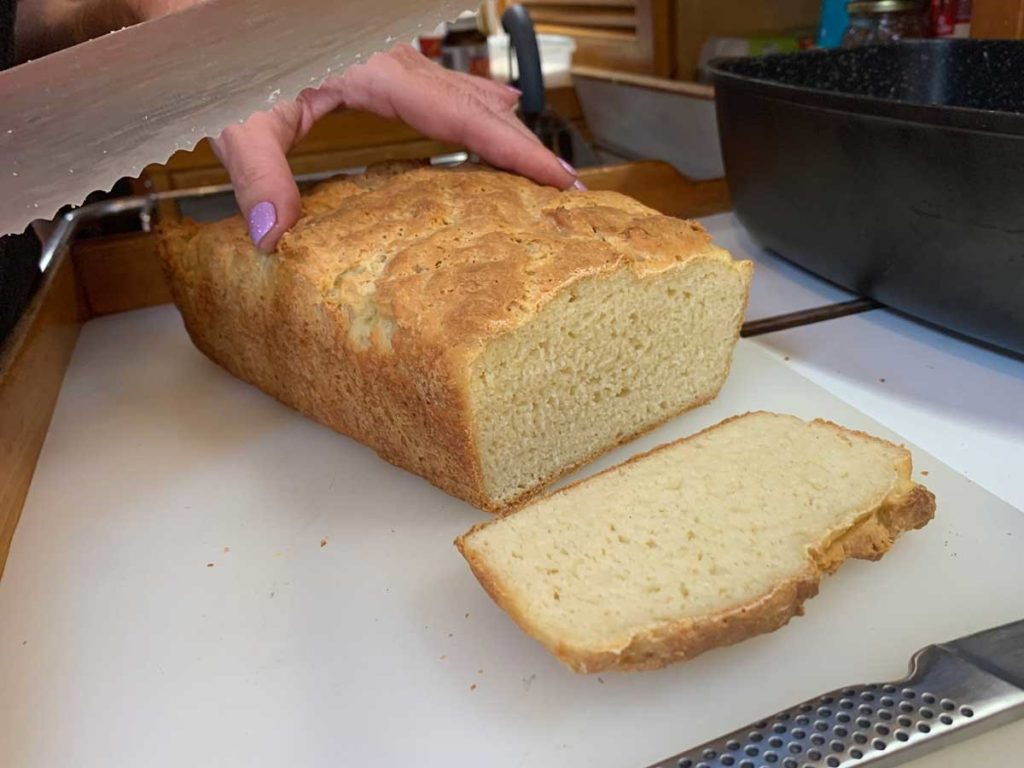
Tess prefers a gluten free diet. She isn’t celiac. But just like many people, she has an uncomfortable reaction to too much gluten in her diet. And so, I get to make gluten free bread, usually a white sandwich loaf or scones, pancakes, rock cakes etc. regularly.
She prefers my gluten free bread to the commercial varieties she has tried. Cool. Good husband…
No, I cannot take credit for the basic recipe I use. I have adapted one I found a few years ago. It comes from a lady named Shannon. She has a website www.alittleinsanity.com and has great recipes for those who want to avoid gluten, eggs, lactose etc.… Check her out if you are inclined in that (dietary) direction.
Her gluten free bread recipe is very heavy on sweetness, I believe she is in North America where sweet tasting breads are normal. The main change for our palette is to limit that sweetness. So, here is my version:
Note that I do not use an electric mixer. We live on a boat and that equipment is just not necessary or we learn to make do. However, that doesn’t mean you need to use muscle power if you have a well-equipped kitchen.
What we need:
Yeast Mix:
- 1 cup water.
- ½ cup milk.
- 1 Tablespoon of runny honey or sugar (your choice white or brown).
- 3 teaspoons of dry active yeast.
Dry Ingredients:
- 3 Cups of Gluten Free Flour (I have used the cheapest standard available at our two main supermarkets in Australia. The recipe is quite forgiving).
- 1.5 teaspoons Xanthan Gum.
- 3 teaspoons baking powder.
- 2 teaspoons table salt.
Wet Mix:
- 2 teaspoons of apple cider or white vinegar.
- 100ml olive oil.
- 2 x 70g eggs.
The “how to” bit:
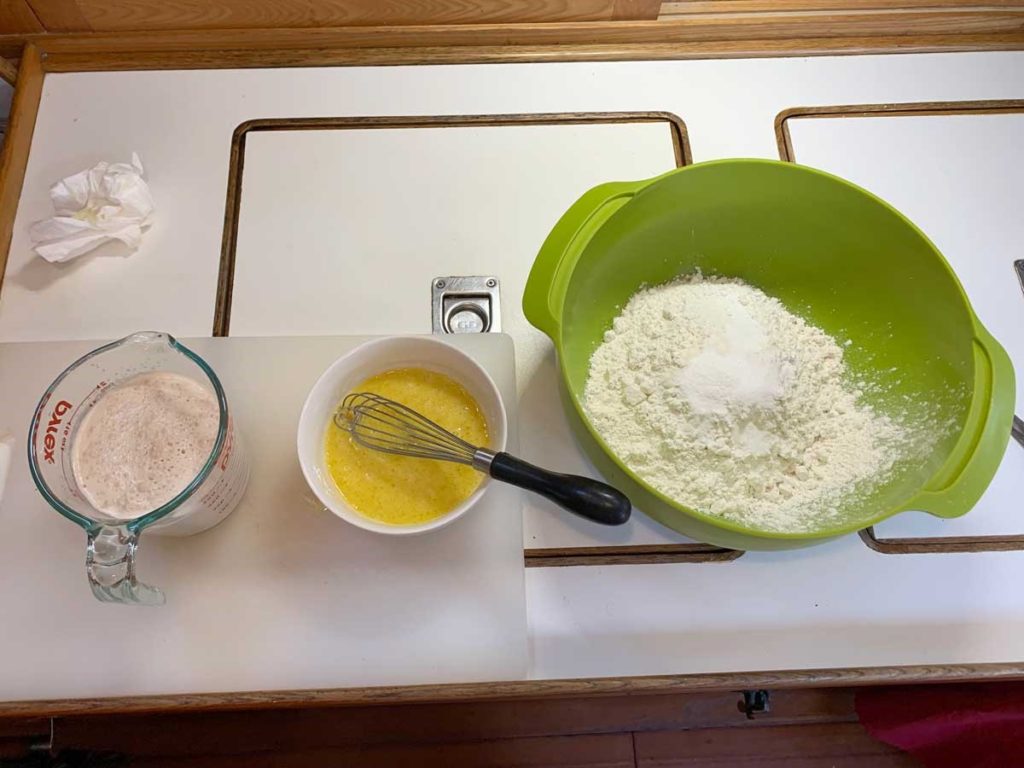
Get stuck in and prepare the main three areas (yeast mix, Dry ingredients and Wet mix) before doing anything else:
- Combine the yeast mix ingredients. I do this in a measuring jug to make it simpler. Make sure the water has been warmed beforehand so that the whole mix is comfortably warm. Not hot. Stir.
- This is important to do first as the yeast will need about 10 minutes to be activated. The mix will have a foamy head to it when its ready.
- Dry ingredients go into a bowl large enough to take the whole mixture. Put the flour in first, then any order will do. Give them a good stir to combine.
- Put the wet mix ingredients into a bowl and whisk to thoroughly combine them (The bowl in the photo was bit small, I should have used a larger one).
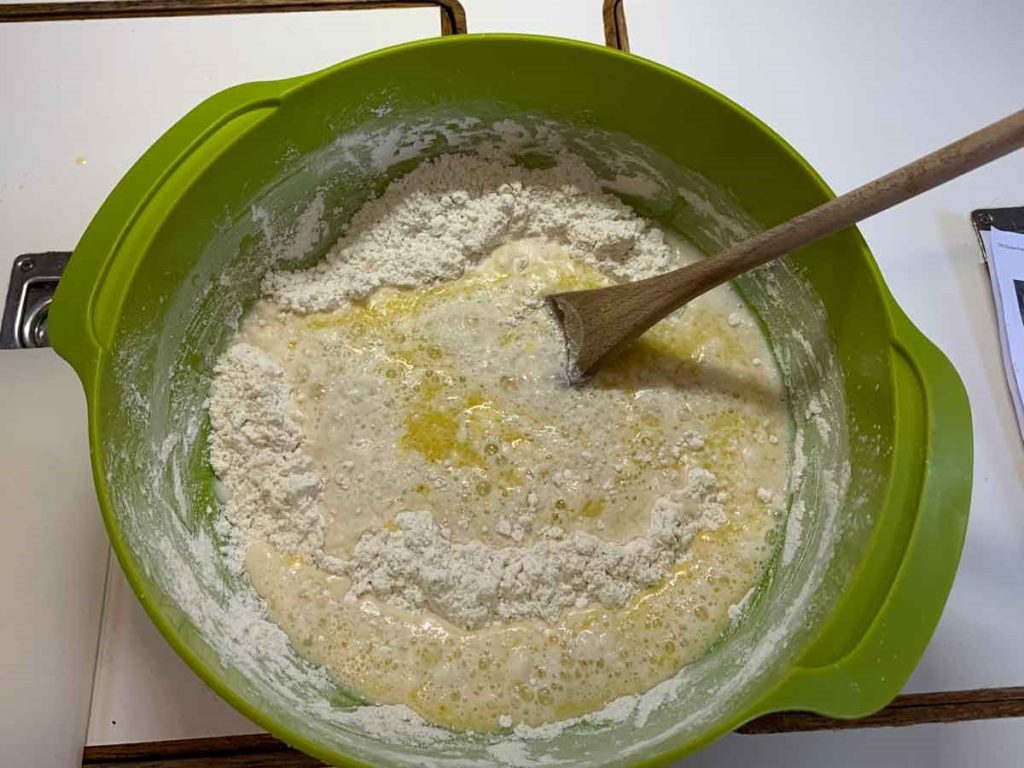
- After the yeast mix is ready, put both the wet and yeast mixes into the dry ingredients bowl and mix, mix, mix. I use a wooden spoon.
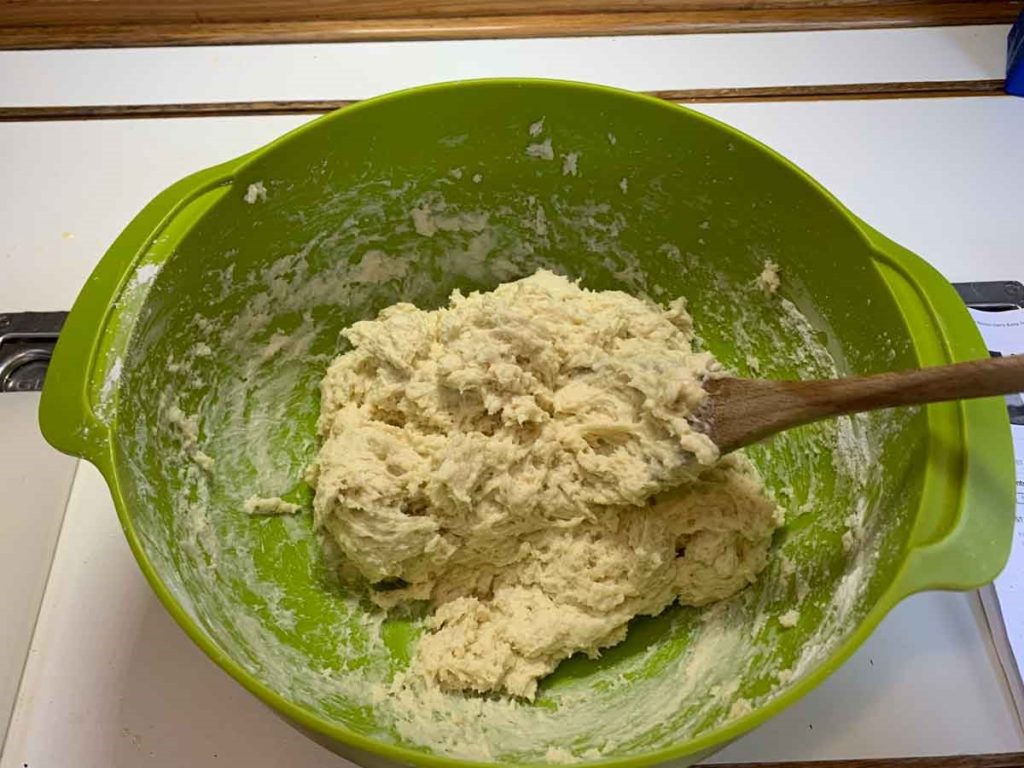
The mix will be much wetter than a standard bread dough. The photo below shows how this batch turned out. Slightly drier than I usually get. I could have added a bit more water but then this proves just how forgiving the recipe is.
- Prepare a bread tin. I line mine with baking paper for super easy removal when baked. To keep the paper there, I smear lightly with olive oil before placing the paper.
- Using a silicone spatula, I place the dough into the bread tin, then I even it out as best I can. This is not important as the dough will rise, fill the spaces and create the finished appearance.
- Cover the tin and leave in a warm place for approx. 30 minutes. Don’t let the dough rise above the bread tin sides as it doesn’t have enough body to hold that shape until cooked.
- Preheat the oven to approx. 190C – 200C. (Say 375 – 390F).
- Bake for 35 – 45 minutes. Shannon comments that if the crust is darkening too much too early, cover with some tinfoil for the last 10 minutes.
- As soon as the bread is out of the oven, turn it out. BUT do allow it to cool before slicing. I know, I know. It’s irresistible. But just wait a moment and enjoy the aroma.
Our oven is a boat’s gas type and is not easy to find and hold a specific temperature. Never mind, the bread always works anyway.
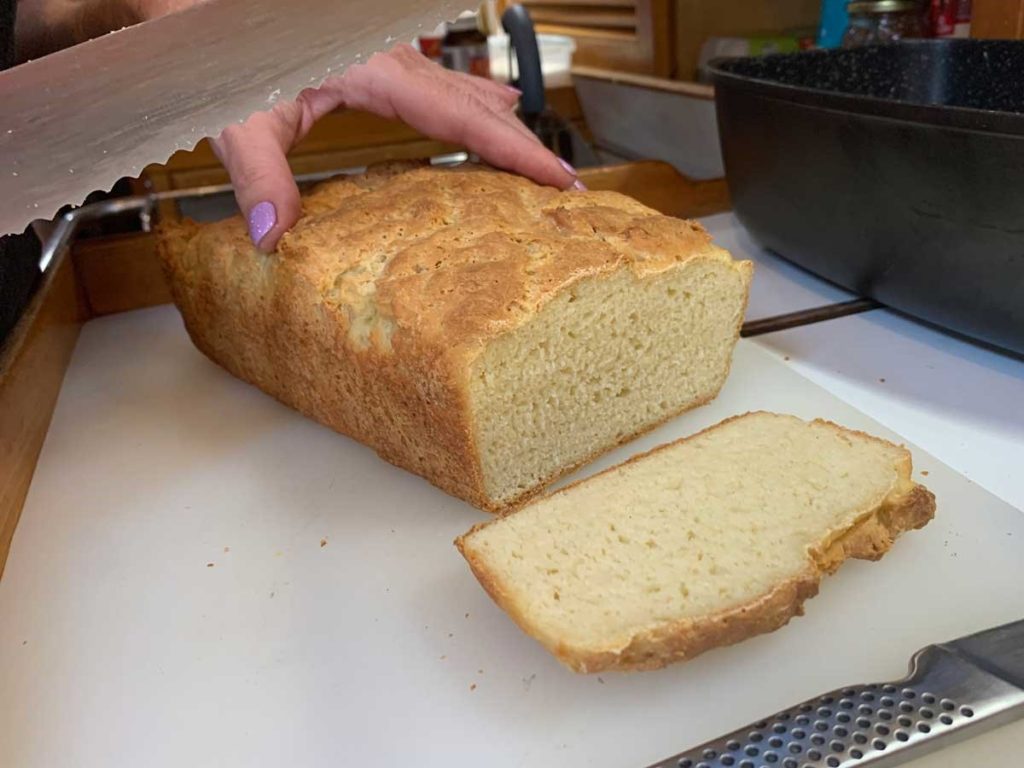
But wait! There’s more!!
Last Easter Tess asked for an Easter loaf. Preferable a “brioche” style. I used the same basic recipe but with these changes:
- The yeast mix had more milk, less water. Three tablespoons of brown sugar and a bit(?) of runny honey for good measure.
- The dry mix had added copious amounts of Nutmeg and Cinnamon and (approximately) a cup of sultanas.
- In the wet mix I first melted about 150g of butter to replace the oil.
It was awesome. Tasty, Fruity, Sweet, Buttery. Not a real brioche of course, but perfect just the same.