Category

Liveaboard

Category

For our Christmas anchoring adventures, It was 10.30ish when the storm had passed. The air was heavy with damp. It was humid from the summer storm. At the same time, it was pleasant as there was enough breeze to take the edge off the humidity.

It had been a long lunch. A long Christmas lunch that had rolled into the afternoon and then evening. Great company (Bill Fuller and David John Dabrowski), great food (thank you Bill) and conversation. Until we were slowing into a food coma, sprawled out across Bill’s lounge fighting for control of the remote as we listen to rock videos. Starting with Feliz Nadidad.

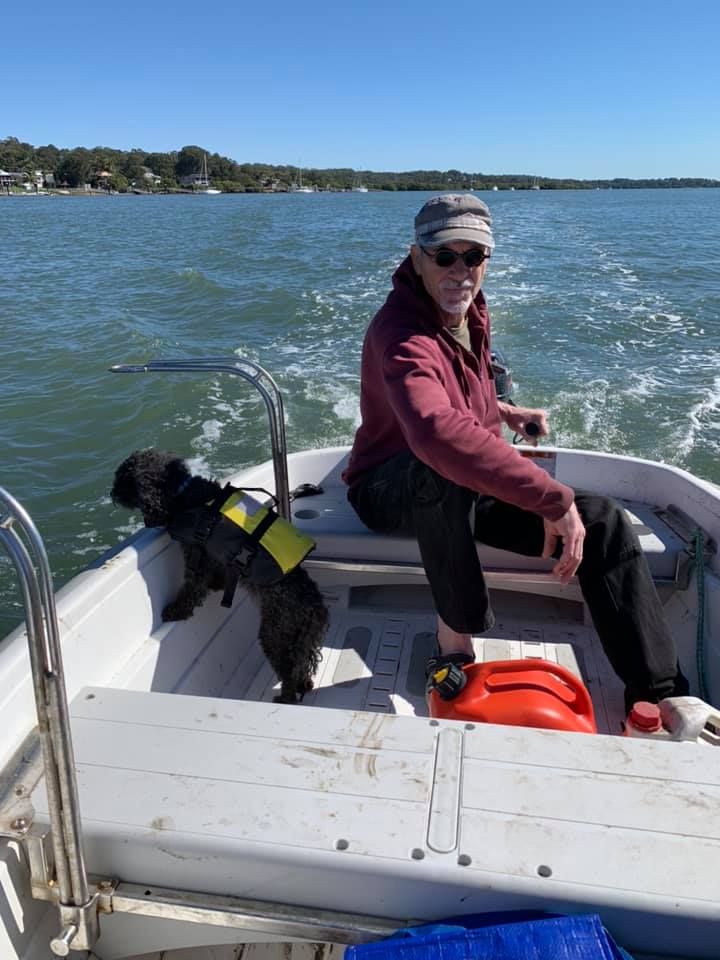
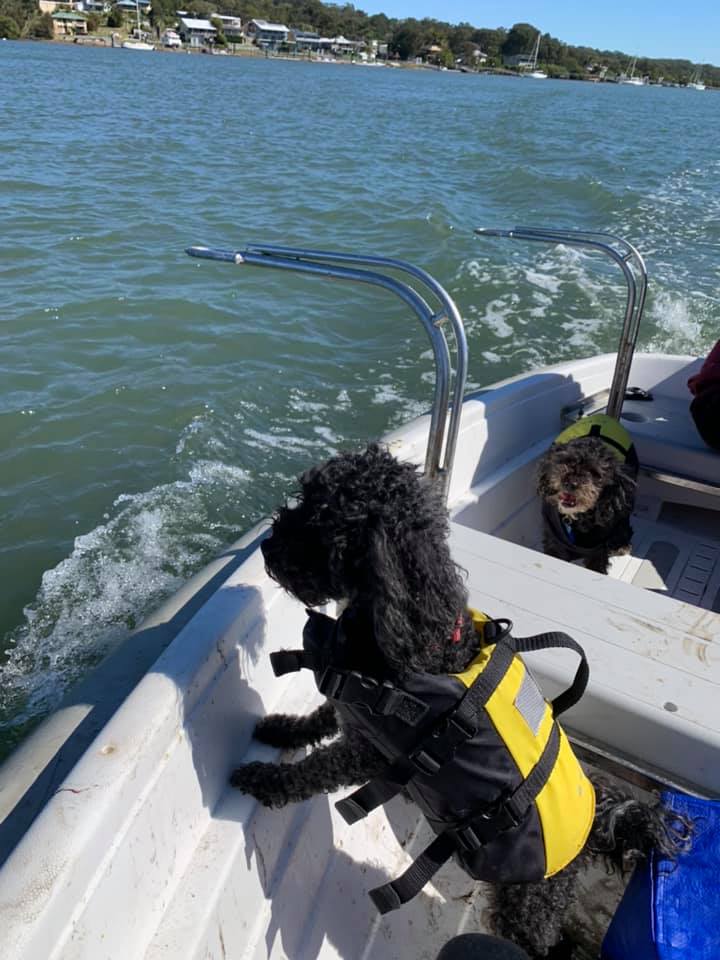
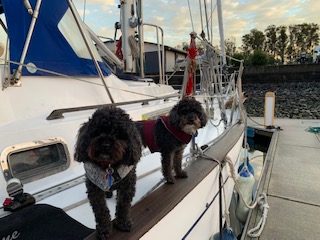
We arrived back to the boat ramp full, content and ready for bed. We put the dogs in their life jackets and our Christmas loot in the dinghy and plunked our very full selves in there as well and commenced the short commute from the jetty to the yacht. As we rounded the corner of the jetty, we could see that our yacht was no longer on the outside of our neighbouring yacht, the Tardis II. Curious. As we approached, we knew they were too close together for comfort. As we closed, we could see my fishing rod was broken, snapped and sadly hanging off the stern, the first sign of the misadventure. Little did we know at that point in time more was to come.

We thought the Tardis II may have drifted. It had.

We snapped out of our indulgent haze to be wide awake. Obviously, we needed to move away from Tardis II. Marty (Martin Lloyd) starts Saboteur’s engine and I go up the front to raise the anchor. This is done with an electric winch as there is no way I would be able to lift 30m of chain and an Excel anchor weighing 32 kilos. As the anchor breaks the surface I involuntarily say ‘whoa’. Curious as it’s not an expression I really use. However, that is what came out of my mouth. Marty shouts “what did you say, you have to speak up”. I walk back to the cockpit and tell him he needs to check it out for himself. We had lifted not only our anchor but another anchor chain and yet another, both wrapped around our ours. We had two alien anchor chains hooked onto our anchor.

There was no way I would be able to lift them off. So I take over at the helm and Marty inspects the situation. He grabs the boat hook hoping to release one chain. That was never going to work. Each chain was twisted and holding the other in place. Lucky us.

Some quick thinking

If we could lift our anchor on one of the halyards and rotate the boat we might be able to slip one anchor chain off. So, I jump in the dinghy and start nudging our boat. Marty says you will need more power than that and so I give her some more power. She is turning. Marty could rotate the anchor enough and the first chain slipped back into the darkness of the water. Brilliant, one down and one to go. The second chain is draped over the anchor shank and cannot be persuaded to slip off as it keeps catching on the anchor blades.

We are assessing the situation and realise the only way to get the second chain of is to remove our anchor chain. This requires us the continue to lift our anchor on the halyard high enough that we can undo the D shackle. I raise the anchor on the halyard winch at the mast. Marty goes downstairs to grab the tool to undo the D Shackle. We have another problem. The nudging the boat to turn… well she was still turning. The first turn we both ignore thinking that she would slow down and while she was close Tardis II, she was not going to hit. But on the second turn I am on the boat hook having to push our stern of Tardis’s bow. Meanwhile Marty is still downstairs.

We are still turning, and drifting.

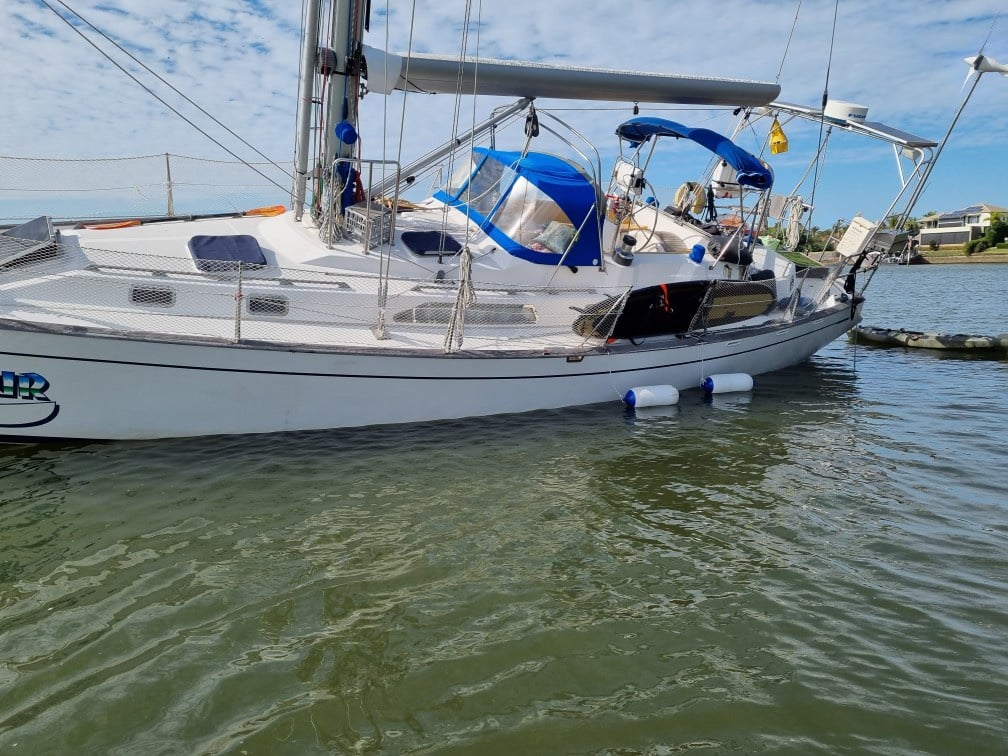
With the drift we are getting closer again. The next turn I and have to push from about 2 meters from our stern. I know the next turn I would not be able to stop the collision. I throw fenders over the side (love our set up for the fenders, super easy and quick).

Then I jumped on the helm and took her out of neutral into reverse. I give it a squirt or two to move slightly away from our nemesis. Remember we are still hooked to an anchor chain. Which now has at least three more twists in it.

Marty appears in the cockpit once again. I put the boat back into neutral and join him. The extra twist in the chains is not helpful. Marty manages to undo the pin in the D Shackle however the extra weight on the chain was making it very hard to remove the pin. Somehow together we managed to pull the pin out, releasing our anchor from the entangled chain. I am back on the winch and lift our anchor higher so that we can now swing it over the safety line and lower it onto our deck. We leave it in place and head out into the main channel. By this stage it is around 12.30pm.

We had to reconnect our anchor chain to the anchor and put it back in place on the bow rollers ready to re-set. But more importantly work out where we were going to anchor. Marty says take us somewhere safe, as we need two sets of hands to manoeuvre the anchor. When we had plenty of sea room we locked the steering wheel and set about resecuring the anchor to the chain and then put it back in place.

The only decision now is where to anchor.

We did not want to be anywhere near the Tardis II. We pick our spot, closer to one of the prawning trawlers. Drop anchor. Let it grab. Damn we drifted back too far. I could not really see how much chain we had out in the dark. I grab my head torch off Marty, raise the anchor and we try again. Bingo… Got it this time. We dropped thirty meters of chain.

What a night, we make a cup of tea and sit for a bit. Until our weariness took over. Time to go to bed. We’re both covered in mud. My gorgeous silk dress… covered. I soak my dress, to wash it properly in the morning. It is time for a shower.

We were not looking forward to seeing what damage had been done to our boat.

In the morning, I get up and step over on to the swim board and have a look. The side of the hull, near the fishing rod is grazed. It will probably polish out. The anchor left a small gouge in the forward hull which probably won’t polish out.

We learn the next day from speaking to other’s here that this is a common problem. The owner of the Tardis II apparently lives on another boat in the area and is an unpleasant character. On each of his boats he puts out about 50 to 60 meters of chain. Which means his boats will drift on their chains great distances. We are not the first boat to have had our anchor chain caught up. Apparently, he does not care.

Furthermore,

We learnt that in the 2011 floods, many boats attempted to take shelter in this bend in the river. However, a few of them snapped their anchor chains here and there are a lot of chains and anchors at the bottom of the river in this bend. I am sure there is money that could be made if anyone wanted to pull them up.

With each crazy mishap and adventure, I love the feeling of overcoming the challenge. I am also becoming more impatient for our trip to NZ to start.

Love our crazy life.

Will add photos later. It is too depressing to take the photos of the damage.

Originally published on Facebook on 28/12/21.
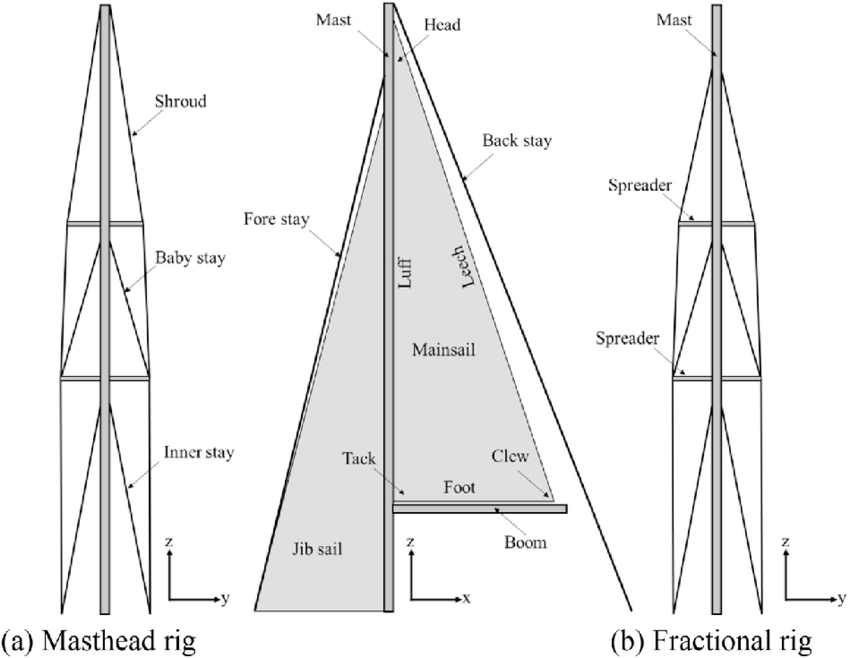
Climbing the mast…

Tuesday afternoon

Marty called me and here’s how it went.

Marty; ‘Hey baby, I need you to go up the mast.’

Me; ‘Why?’

Marty; ‘I was replacing the topping lift (a line that run up inside the mast, and then out to the end of the boom and back again) the new line is a little too short. I need you to feed it back down the mast.’

Me; ‘Sure no-problems. (Why we use this expression I don’t know, because how do you know there will be no problems). When?’

Marty; ‘Tomorrow morning, first thing before the wind gets up.’

So that was the plan.

Wednesday morning 5.30 am.

Me; ‘Hey Baby, (who is still lying in bed) am I going up the mast this morning?’

Marty makes a sound that resembles a moan rolls over and says, ‘Not today, I don’t feel up to it.’

I was surprisingly disappointed. It appears that I was really looking forward to it. I thought I was nervous and a little concerned. It appears that I was more excited than anything else. There is nothing I can do but wait another day. You don’t want the man on the winch and the break line not feeling up to it when you are 23 meters above the waterline.

Wednesday, I ran into friends on the main street at Manly, we stopped for a seriously good coffee at Le Bistro. I love those happy unplanned moments. I asked Bruce if he would give us a hand on Thursday.

Thursday morning 5.40am

I notice the text from Bruce. He is early and I go to marina security gate to let him in.

We get back to the boat and Marty is getting the bosun’s chair and lines ready.

We are using the:

  • Mainsail halyard – the line used to hoist the main sail up and down. 
  • Bosun’s chair – the canvas seat connected to the mainsail halyard
  • Electronic winch – to hoist me up
  • Spinnaker halyard – the line used as my brake line in case the main line fails. Bruce will be operating this.

The crew:

  • Marty on the electronic winch
  • Bruce on the brake line
  • And yours truly on the outdoor elevator
I set up the Facebook Live.

Meanwhile Marty ties a bowline knot in the mainsail halyard securing the Bosun’s chair which I then climb into. I also hook the halyard cleat onto the Bosun’s chair D ring.

I adjust the waistband. I tighten it to stop me slipping forward. I realised I did not do this last time. This is the second time I have gone up the mast. The first time was a couple of months ago. Our friend Dan had gone up to do some electrical work at the top of the mast and when he came down, he suggested I go up. He said something along the lines of, ‘You may as well do it now, it (the water) will never be flatter than it is now.’ He was right the water was as flat as glass and there was no wind. It was perfect. And so, I cautiously went up. That day I thought I would only go to the first spreader, however it seemed OK.

I decided to go up further after navigating my way over the spreader. I was at the second spreader and pushed back to step over it and cautiously continued my way up to the top of the mast.

This time there was a light wind, 5-8 knots. We were in a marina and sheltered. Additionally, the boat weighs 20 tonnes and does not rock (or roll) excessively due to her weight below the water line.

We attach the safety line. We wrap the spinnaker halyard around the manual winch at the base of the mast. Oops wrong way. Do it again. We check the clutch cleats. These allow the lines to travel one way, but lock if we slip… Another safety measure.

And so it is time for the bounce test. I swing out…

Marty says; ‘It’s a bounce test not a swing.’

Me; ‘I know.’

I swing back in and do my bounce test. We do this to make sure nothing breaks.

It all looks good. I kick off and swing back. I love swings.

The bounce test entails taking your feet of the ground and bouncing to check;

  1. that the lines take the weight and support you
  2. your knots are holding, and
  3. if anything breaks you are no more than knee high to the deck.

I notice the line is twisted around the mast. We fix that.

Bounce test 2.

I go back on to the top of the deck and bounce.

Bruce has the break line ready.

Marty; ‘Alright, ready to go up?’

Me; ‘Yep.’

Marty returns to the cockpit to operate the electronic winch. I come back into the mast.

I am half winched up and I am stepping up on to safety railing and then across on to the boom.

We stop. Now to settle in and hug that mast. Lightly, not heavily. I wiggle my arse in the seat and make sure I am sitting back in the seat.

I gently wrap my legs around the mast followed by my arms. There is a track on the far side of the mast that my fingers find. It is helpful to keep me centred. Marty is behind me in the cockpit and the canvas cover is in place. He can’t see me. Next time we will roll it back. It is OK this time because Bruce has full visibility and is on the safety line.

I have to speak up to be heard.

Me; ‘Ready, Slow’

I am gradually creeping up the mast. I am restricted by the safety line.

Me; ‘Bruce, more line please’

We are settling into a rhythm and working well together. About halfway between the boom and the first spreaders I can stop hugging the mast and open my arms out to hold on to a steel ring. Another meter and I step back away from the mast and put the ring between my first and second toe. It is comfortable.

As I approach the first spreader I ask Marty to slow down. I need to step over the spreaders. Awkwardly, I step over the spreader I am back to hugging the mast with my arms and legs. I feel something on the other side of the mast. I think it is a navigation light.

Marty; ‘Let me know when you are in position.’

Me; ‘I just got to…’  And my voice fades off… (I think I do that a lot when I am thinking, concentrating).

Marty; ‘I can’t hear you…’ That is said a lot as well.

And so, I continue up the mast.

Passing the first spreader I was feeling comfortable and slightly more confident. And surprisingly not anxious or scared. Having said that I was not that keen on looking directly down. I believe my sense of safety came from having three fail safe systems in place and being operated by two people I totally trust. Besides, the rigging is brand spanking new.

As I approach the second spreader I once again stop hugging the mast and open my arms out to hold on to the steel rings (not sure why it is called a ring when it is a cable, but that is boating for you) another meter and I step back away from the mast and put the steel ring between my first and second toe. It is more like a spider man walk up an invisible wall now.

All of a sudden the sound the winch is making changes. The tone drops. It is working harder. I was surprised at how clear I was when this happened. I did not panic or go, what the… It was, yeh it makes that sound when the main sail gets to this point. Besides it is designed to handle significant wind force. My weight is nothing in comparison.

Me; ‘Stop, stop…’

Bruce To Marty; ‘Stop, stop…’

Marty; ‘I can’t hear her.’

And he stops…

Again, I push back to step over the second spreader and go back to hugging the mast. I no longer have the track on the other side to hold on to and keep me centred. It is very still, so I am not being pushed in any direction by wind or breeze.

Bruce is doing a perfect job on the safety line. Again total trust. I was looking out at the view and did not realise I was so close to the top when my shoulders got wedged under the stays.

Marty stops the winch and shouts out ‘How much further?’

Marty to Bruce; ‘I can’t hear what she says.’

He starts the winch again. I was close.

I shut out; ‘Stop… Stop… stop…’

Bruce shouts; ‘Stop.’

My body is a little squashed.

More precisely my shoulders are wedged between the mast and the stays. Marty and Bruce had to lower me down a touch so that I could de-wedge myself and then keep going about 60cm. Finally I am at the top. There are two folding foot rests about 30cm below the top of the mast. I unfold them and can place my thighs over them and so I am comfortable and creating a stable position for me to work from. My crew put the locks on. I start feeding the topping lift line down.

Marty and Bruce go the base of the mast and Marty shouts up, ‘You can start feeding the line down.’ It was already happening. They were watching and waiting to see it appear through the aperture at the base of the mast. ‘Stop,’ I hear. Marty reaches his hand in and grabs the line. Success, I continue to feed the line down the mast and Marty pulls it out. That task completed, now to lower me down.

I had to unhook my legs from the footrests and fold the footrest back up. Marty reverses the line and Bruce the locks, and I slowly start going down.

I am elated. I am enjoying the view with brief glances down. I am so, so happy. I step back over the second spreader and continue down and over the first spreader. I am on the boom. I really want to have a swing now. However, I knew Marty needed to go to work and Bruce had to get home to do the school run.

I was super happy. Twice I have done this.

Marty and I talked about me going up the mast monthly and to do it with a slight breeze next time. For sure when I need to go up one of these days, the weather won’t be perfect. We also need to practice just the two off us. Marty on the winch and the break line. He has done it before with Dan.

Ah, more adventures ahead. More fun to be had.

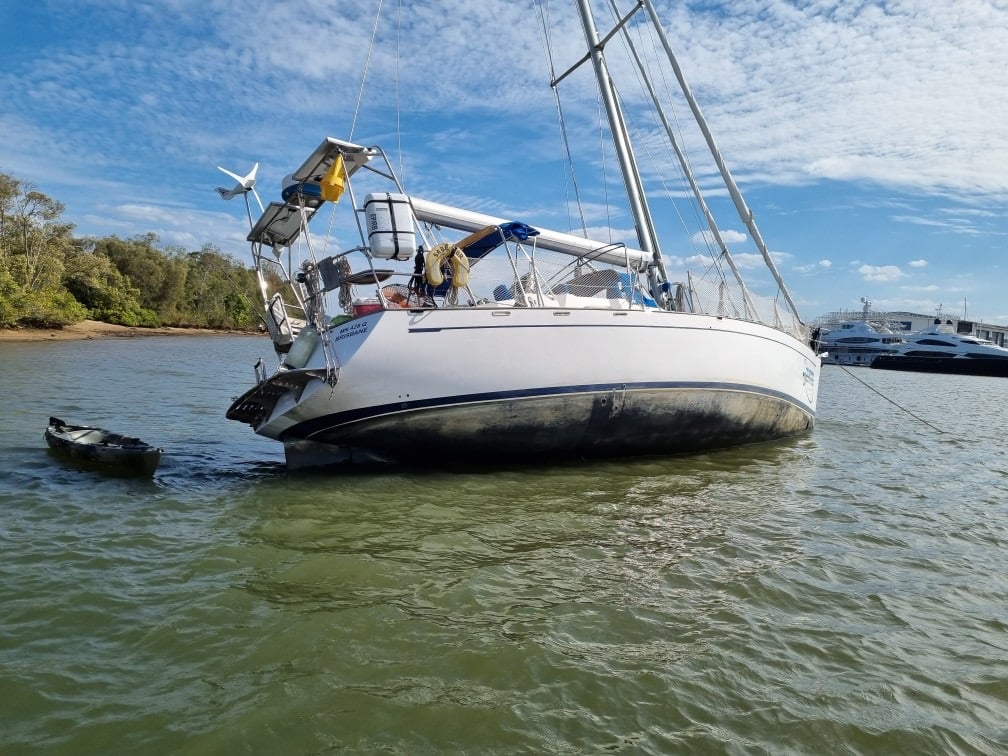
‘We are as beached as’, I said to myself. I turned to see Marty’s (aka Martin Lloyd) reaction. Stressed was the first word that came to mind.

Six hours earlier…

I awoke to a lovely morning. The bird song was calling me to rise. I quickly made a cuppa in my travel mug, grabbed the dogs, their life jackets, my iPhone and jumped on my kayak to go for a paddle. It was lovely high tide, about 20 degrees C and perfect conditions to go up the Foxwell Island inlet to Jackson’s place. A beautiful spot where our friend Daniel Cooke buried his dog Jackson.

We had a magical, chilled paddle which I captured on a Facebook live post… We paddled and drifted, and I answered questions as they popped up on the live post and sipped my tea. It was bliss. All too soon, it was time to head back to the boat.

4.5 hours earlier…

I was back on the boat, and our friend ‘Jazzy’ phoned saying she would be there in 45 minutes for a coffee. I grinned. We had not seen Jazzy in about a month. We love hanging out. Time to wake Marty. I turned and looked out the cockpit. ‘Interesting; the land was a little close… I went up upstairs, too close, I felt a slight roll, turned on the instruments and waited for the depth to come live. It was 0.0… still waiting… It flashed 0.1m meters… and flashed back to 0.0. Shiver me timbers, we were touching the bottom and it was not yet low tide.

We were not yet ‘beached as’…

I started the engine, woke Marty, he threw on some clothes and we set about finding a deeper spot. We checked the wind, it was going to pick up and they were strong gusting northerlies. We decided the passage opposite Santa Barbara Park for better shelter. As we motored around the corner, we realised everyone else had the same idea and were there before us.

We turned and headed back. Saboteur is solid, she is heavy in the water and in rough conditions we can barely feel it. We both did the calc’s. How much longer did we have before low tide (it was going to be super low (0.2m))? At what time and how much further would the water drop? We both came up with the same answer. (This rarely happens). Our calculations told us that we needed to anchor with .7 meters of water under us and we would be fine.

We found the spot a little further into the deeper water of the channel than where we were previously. Ping, I received a text from Jazzy, she was at the café. We jumped in the dinghy and headed in. Had a lovely breakfast at the @Quarterdeck Kitchen & Bar.  Seriously good.

3 hours earlier…

We said goodbye to Jazzy. We did a visual check on Saboteur and we thought she might be touching the bottom, but we were not worried. The bottom is soft sand and we were already at low tide. Saboteur has a solid keel and a full skeg protecting the rudder. And touching a soft bottom occasionally is par for the course in the Moreton bay area.

So anyway, we jumped in the car. We headed to the Dive Warehouse where I grabbed myself my snorkelling gear. Happy dance.

All in all, it had been a lovely morning.

We headed back to the boat, parked the car and jumped in the dinghy and around the corner…

‘Beached as….’

Oh my God we were ‘beached as’.  Seriously ‘beached as’.
The moment we found out we were 'Beached as'

We saw a dinghy circling our boat. It turned out it was our friends, Steve and Jane who were taking photos to send to us. It would appear that we had our calc’s wrong, but how? We would work that out later. Our subsequent discussion revealed how. Jane said low tide was 10 minutes ago. It couldn’t be… and with that we realised that we had done our calc’s on the wrong tide data. We had calculated on the mouth of the Coomera river not the end of it… Easy mistake.

Our baby was looking like a beached whale. We were seriously beached as. She was at 30-40 degrees. I said to Marty let’s go back to the café. There really was not much we could do until the tide turned.

As we pulled up at the café in the dinghy we hit our propeller prop. Bugger. Martin decided to go back to the boat and put the fresh meat we had bought in the fridge and come back. The dinghy outboard was now useless with the prop free-wheeling. He pulled out the oars and rowed. He shouted as he passed, ‘order me a coffee.’ I went to the café, ordered him the largest flat white they had and me a glass of house red. I figured I needed it. Marty returned, and told me about the mess in the boat… All things considered it was not too bad.

I sipped my wine, while Marty sipped his coffee.

We saw our mast slightly starting to rise. Maybe 25-30 degrees now. It was time to head back to the boat. The challenge was that with the rising tide and the strong winds, they had pushed Saboteur further into the shallows. While we were away, the wind had turned the boat against the current as it slackened at low tide, and by then both the wind and the incoming current had conspired to push Saboteur further ashore.

First decision: We had to put the second anchor out to stop us from being pushed further onto the shallows. The anchor line was securely attached in the anchor locker and we manually feed the entire chain and line out, carried it around to the beam of the boat and secured it to a cleat.

Marty jumped in the dinghy (remember, we had no outboard motor) and rowed from the swim board into the current, then grabbed the side of the boat. I lowered the anchor to him followed by the chain and the warp (line). He rowed the boat out as far as he could and dropped the anchor.

He rowed back, secured the dinghy and climbed back on board via the swim deck and back into the cockpit. We took up the slack of the second anchor warp around the starboard sheet winch. We put a good amount of tension to that anchor to prevent the boat being pushed further ashore.

And so our ‘beached as’ afternoon settled down…

We were able to gradually regain control of Saboteur by taking up the slack on both anchors with the rising tide. I grabbed some red wine and Marty put on Talking Heads, ‘On the road to nowhere.’ And we sang, danced and laughed the afternoon away. When we were close to level again and we could start the clean-up.

When we were off the bottom, we moved the boat for the third time that day.

We were truly happy to have rescued ourselves from being ‘beached as’ and having mastered using two anchors to get out of trouble.

A crazy afternoon but we were happy… now we had to get organised, as we had guests coming for dinner…

Bob, the dinghy and mudflats…

Yesterday, we (Martin Lloyd and I) had to right a capsized dinghy… yes, Diann Richards and John Richards before you have a heart attack, it was not ours. It was a neighbour’s dinghy.

Here’s how the day unfolded.

We left the calm waters and safety of Horizon Shores Marina just after high tide to head back to an old favourite anchorage just off the south of Russell Island. We travelled with the current and made good time of our voyage.

We were anticipating northerly winds, strong gusts and a brief squall. We decided to anchor at Perry’s Hole (about 40 minutes from our destination) as it would offer better shelter from the pending winds.

From there, we found a spot, dropped anchor and settled in. I was writing and Martin was catching up on the MotoGP between copy editing for me.

The wind was picking up and the boat was leaning. At all times she felt safe. Martin would pop his head into the cockpit every now and again to check. A houseboat had anchored close to us. Too close for comfort. And directly in the line of the prevailing winds. This meant that if their anchor slips, they were more than likely going to hit us. Martin put his jacket on and stayed in the cockpit to monitor. It had started to rain and the squall arrived. Sure enough, within a couple of minutes they were getting very close.

Martin gave them a friendly horn warning to which they turned on their engine raised their anchor and moved forward. They appeared to drop anchor again just ahead of us. Still in line with the prevailing winds. Martin gave them another horn blast this time accompanied with arms gestures to move along the channel. They raised the anchor again and moved as requested.

Happy with the distance and feeling safe, we settled down to wait out the weather.

Martin continually checking their position. Next thing you know their dinghy was upside down and they were trying to secure it onto their boarding platform. They were struggling. Martin lowered our dinghy, put the motor on and headed over to give them a hand returning about 30 minutes later advising their dinghy was secured and we were to go back on low tide (slack water) and try to help them right it.

In the meantime, we fell back into our respective activities.

The winds dropped and slack tide was close, we jumped in our dinghy and we both went over. More hands make light work as they say.

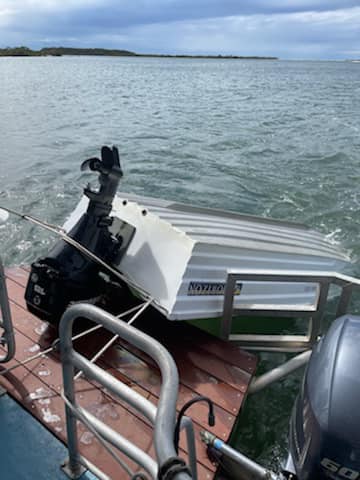
Picture this, their dinghy is upside down, bow (nose) in the water, stern (back) on the deck sitting on the engine and secured by a long rope. It is a 3.5m horizon dinghy designed for flat water. This means the hull is relatively flat and so in rough water it can slap on the water surface. This noise can be quite loud. The owners had turned the dinghy around to stop the slapping sound. When they moved the houseboat, they had not turned it back around and were towing it backwards, causing it to fill with water and flip. Bare in mind, it has a 15 horsepower motor on the back. That is pretty heavy.

Us 4 amigos set about trying to work out how to flip this damn dinghy. We tried many ways to pivot and rotate the dinghy from the back of the deck with no luck. Finally, the decision was made to gently take the houseboat as close as possible to shore. Then, hopefully we could take the line that secured it from the back of the boat to shore and flip it on the beach.

It was a good plan.

The only problem was… the beach was a mixture of sand and mud. And so the fun began. Patrice expertly manoeuvred the boat about 2 meters from the shoreline and dropped anchor. The wind would swing the houseboat away from shore and the gentle swell would swing her back to shore. As we swung into the shore, I stripped off my trousers and stepped off the back deck into the shallows. At first the water was brisk to say the least. I held my breathe and soon forgot about the cold and had to focus on my feet sinking into the mud. I was ankle deep in mud. Wonderful! I wiggled my feet to ease them up and grinned at the squelching noise I was making as I started walking towards the shoreline. There is nothing quite like an unexpected adventure.

Martin and Paul were carefully untying the lines that secured the dinghy while the wind swung the houseboat away from the shore. We waited for the swell to bring it back in. Patrice passed the line to me and Martin and Paul stepped off the houseboat to come and join me.

The next 30 seconds or so was hilarious as they too joined the ministry of silly walks as each step their feet disappeared into the mud. They worked out how to find they own way through the mud and now there were three of us on shore. Patrice stayed on the boat just in case she had to raise the anchor and move the houseboat.

Firstly

We had to move our dinghy which was also tied to the back of the houseboat. Patrice undid it and threw me the line, I dragged it up the mud flat a little so that it was out of the way. Or kind of. We then had to secure the line to the bow of the dinghy and try and turn her around. Unfortunately, the upside-down motor is now acting like an anchor and feeling the side of the dinghy reveals that it is 15 or so centimetres into the mud. It is now like a giant suction cap and we can barely see much of the boat. We had to do something fast as the tide has turned and the water was gradually rising.

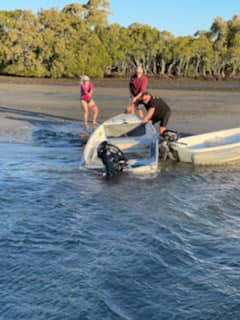
Paul and I managed to get both hands under the end of the dinghy (deep in the mud) and break the air seal and lift her. Martin pulled the line to turn the nose to shore then helped us. We are getting movement. We continue to lift. The dinghy edge is out of the water. We lift more. She turns over. Martin and Paul drag the dinghy as far up the mud as possible, which is not very far given that she is full of water. We now need to bail. We wait for the houseboat to swing back in, I step in our dinghy and grab the bucket that Patrice hands me, then step out of our dinghy into the mud and hand the bucket to Martin. He starts bailing.

We now have a good chance that Patrice and Paul will take their dinghy home.

It was Patrice’s dad’s dinghy. He passed away last year so it has sentimental value. Her dad was a seaman who worked on the trawlers. We have a discussion; I ask the question ‘does the dinghy have a name’? I believe Patrice said they just call it Bob. Martin quipped- ‘even upside down it is still Bob’. We all laughed.

While Martin is bailing, I walk the couple of meters to firmer ground being more sand less mud, turn to face the lowering sun, stretch my arms, hands and fingers wide, perhaps to try and warm up. I am getting cold. The mud itself was reasonably warm. Being in the wind my fingers were freezing. They were cold to the bone. Eventually most of the water is out of the Bob and we are able to, when the houseboat swung back in, pass the line to Patrice to tie up Bob the dinghy.

Martin and Paul jump in our dinghy, Martin got the motor going and motored around to the other side of the houseboat and secured our line. I waited once more for the houseboat to swing back into shore and stepped on board.

All on board, and two dinghy’s secured Patrice raised the anchor and we headed to a new anchoring spot for them.

Patrice offers us the shower. We decline. I sat on the deck and washed the mud off my legs, feet and hands in the salt water. Honestly the mud is lovely, and it feels good on my skin. Truth be known I love squelching it between my toes. After getting most of the mud off me, I accepted a towel, wrapped myself up, went inside and sat on the couch.

The sun was starting to set.

Patrice opened a lovely bottle of white wine, Paul cracked a beer and we sat and chatted for about an hour learning about our new friends. Patrice also shared the photos and video she took. I was glad as now I have photos to share. We had fun.

We said good night, I returned the towel and put my trousers back on and we returned to our boat. We were warmly greeted by our animals who demanded food.

As I reflect back on yesterday and our adventures, I smile. I love boating life. It is a great community. It was nice to be able to help someone else. We have received help from many others and so we were happy to be able to do the same.

We both slept well last night.

#sailingsaboteur #ilovesailing #getoutdoors #wearsunscreen #liveyourlife #whatareyouwaitingfor

Peak hour…

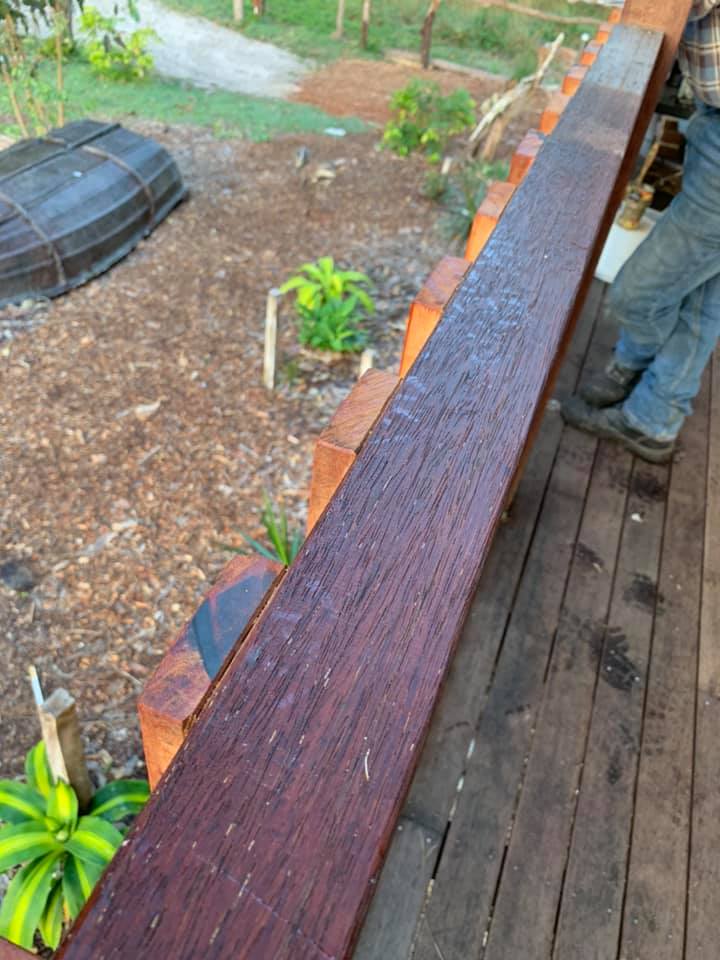
Where: On the verandah, Lindsay’s batch on Russell Island. The dogs are with us, sprawled out warming themselves in the morning sun.

Context: Marty (aka Martin Lloyd and I) are visiting Lindsay Hick.

Friday morning: Lindsay is leaning on the veranda railing, I’m in one of the comfy deck chairs. Lindsay and I sip our cuppa’s predominantly in silence. Marty is still catching up on some zzzz’s.

The various birds are chirping, screaming and squawking while nearby Kookaburras are laughing at some insider joke.

7.30 am

Lindsay: That’s the first car this morning…

Me: It’s magic.

8.15 am

Marty wakes up and I make him a coffee. He joins us on the deck. He is slow to wake…

8.30 am

Lindsey: That’s the second car this morning…

Marty: Is it Friday?

Lindsay: Yes.

Marty: Must be peak hour.

We all laugh.

Lindsay: He’s the local painter, heading to work.

Marty: That is the definition of peak hour, going to work.

The guys head to down the side of the house.

8.40 am

Another car goes past, with a friendly wave and a shout out, ‘Morning Lindsay’.

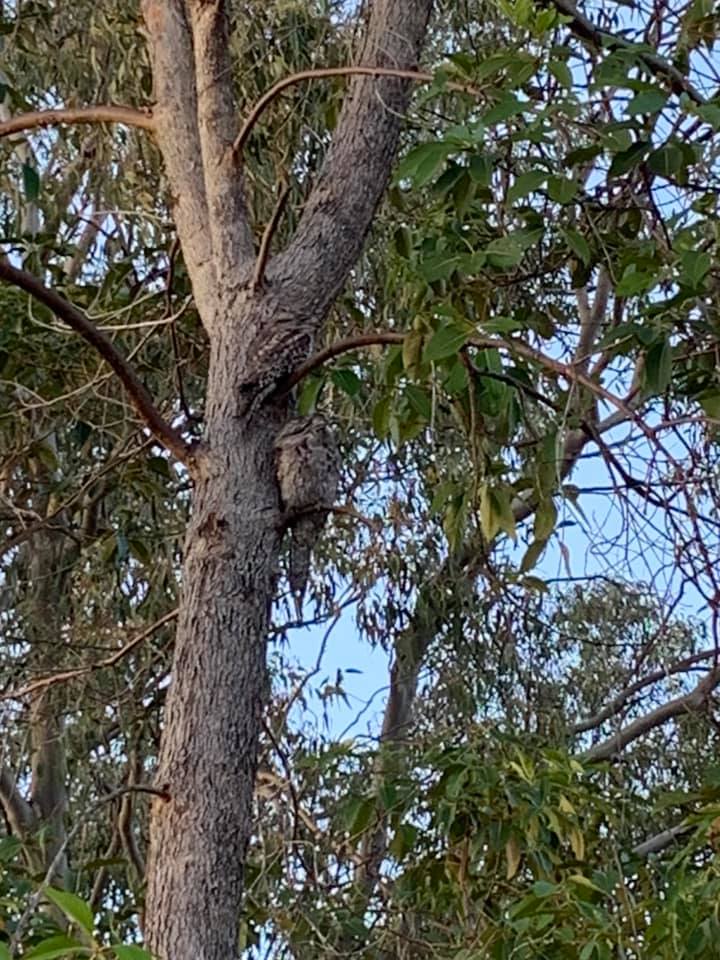
Gum trees and owl during peak hour

Me: I say to myself, yep definitely peak hour. I look at the clock, we have 20 minutes before we head back to the boat and peace away from the peak hour.

Thanks for having us for dinner Lindsay. Love hanging out with you.

#ilovesailing #getoutdoors #whatareyouwaitingfor #liveyourlife #sailingsaboteur

Yesterday and today, I am finding something else to do because the boat is not big enough. Yes, the boat is not big enough for Alex the diesel mechanic, Martin Lloyd and me. I have learnt that there is such thing as fuel polishing and tank scrubbing and that is happening on board at the moment. What does this involved, you ask? Like you, I did not know about any of this until last week.

When we learnt that someone else (more professional than us) could do the fuel polishing (filtering the rubbish out of the fuel, If possible) and tank scrubbing, it made us very, very happy. One of our fuel tanks has had seriously contaminated fuel. And this was a problem on our passage form Bribie (Bribie Island) to Mooloolaba.

After an awesome chill day and paddle at Bribie passage, the adventure unfolded.

On the 26th June at 3.50am, it was 15 degrees and drizzly. The cool and the dampness had not dampened our spirits as we set about getting ready to depart. I made coffees for Dan and Martin and a tea for myself, put the dog’s life jackets on them and strapped them into the jack straps (safety lines). Martin and Dan set about getting the boat ready.

We pulled up our anchor a touch after 4am in the morning. Why so early? Because we wanted to cross the Mooloolaba bar on high tide. We were planning to cross the bar around 10.30am.

At 4am there is barely a hint of light on the horizon and yet the night was relatively clear. Enough to see the navigation beacons. The beauty of the morning is magical and we travelled along more or less in silence as we started to see the sun wash the horizon with light and a little warmth. Dan and Martin saw a whale. I missed it.

We were barely out of the passage approximately 45 minutes later and the engine stopped. It didn’t restart. We were nose into the wind and the boat was rocking. Not the relaxing kind. More the pitching forward and backwards, rather unpleasantly.

Dan and Martin talked it through and started following the fuel line. We discovered that the primary engine filler was blocked. This is a white paper filter, and it was totally black. No problem, Dan used an empty wine bottle from the night before to drain the fuel out of the filter while Martin retrieved the spare. They replaced it, and Dan bled the air out of the line. This, in total, took about 45 minutes. The engine started perfectly. Off we went again.

Take two.

The passage was rough, we were nose into the wind and were pitching the whole way. Three hours later the engine stopped again. The replaced filter was black. Totally black. Now we had a problem. We didn’t have an another spare and needed to clean the filter. We do not have the right cleaning fluids and degreasers. Fortunately, we had plenty of methylated spirits, and it worked a treat. We cleaned the first filter as best we could and replaced it. About 40 minutes later, you guessed it the engine stopped again, and we had to clean the other filter. And so our journey went on, having to do this a total of 5 or 6 times.

This strategy was fine in the open water, however we could not afford to have the engine cut out crossing the bar. So, after a couple of conversations, Dan took the ‘phone a friend’ option. We had it on good advice that removing the primary filter would allow the fuel to flow. The secondary filter was doing a perfect job as well. We were able to cross the bar with confidence under power.

It was with great relief we did so. As we were crossing the bar, so were about a dozen Forty-niners (racing sail craft) who were training for the Olympics.

The next challenge we had was docking. Having not visited the Mooloolaba Marina Sunshine Coast before, we were uncertain how much space we would have. We were very grateful for the lovely wide space and open pens.

Martin docked perfectly and Dan and I were on the lines. It was the smoothest docking ever. I am in love with our new bow thruster. (A newest addition to the boat that has a small propeller in the bow to assist with turning the boat. Best investment ever!)

Massive thank you to Daniel Cooke for everything from electronics to fuel cleaning. To Michael Brook who came to visit for the weekend to escape Brissy and ended helped Dan empty the tanks and try to filter the fuel that was beyond recovery.

Finally, a massive thank you to Mooloolaba Coast Guard who stayed with us on radio over our 11 hour journey. We felt incredibly safe the entire trip.

Alex is still working on the boat. He is a professional and does not need me hanging around. As I said the boat is not big enough, so it’s time for me to take a beach walk.

#Ilovesailing #fuelpolishing #Tankscrubbing #getoutdoors #wearsunscreen #sailingsaboteur

After the rain comes sunshine and maintenance.

Why maintenance you ask?

The reality of living on a boat is that there are sometimes leaks. Boats are designed to be flexible to move and bend with the elements that they are in. Like high rise buildings have a sway element and aircraft a flex element.

And so it is with boats.

Queue music: 5th Dimension singing, ‘Aquarius – Let the sunshine in’

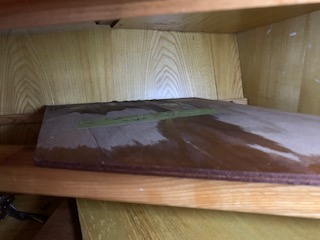
After each rainy period, our routine is to walk around the boat to check both that earlier repairs have actually worked and to look for any new issues in need of repair. Leaks can come from many areas; port holes and hatches whose seals are giving in after 31 years of service, along with any fittings that are bolted through the deck. With our recent two weeks of rain we discovered a new leak. This one was of greater concern for me than normal. Not for any sensible structural reasons, but more so because it was leaking into my clothes cupboard.

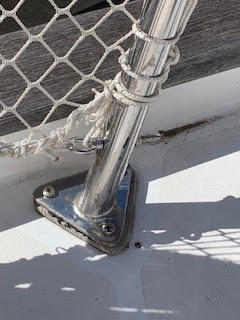
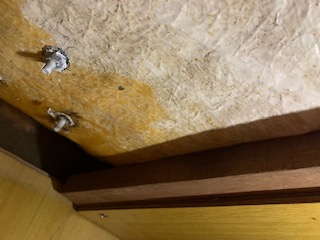
I barely got through downsizing my beloved wardrobe without counselling. And certainly not to have my few remaining clothes (yes, few Martin Lloyd) to be damaged by mould when it rains. And so, prior to the most recent rainy period, we dismantled the cupboard ceiling to trace the leak to its origin. We discovered the leak was coming from where the stanchions (these hold our safety lines in place) bolt through the deck. It was leaking because the company who did the work on our deck when we replaced the teak did not seal the holes where the stanchions bolt through the deck, nor did they put two of the three nuts on the ends of the bolts. Let’s leave that there…

Suffice to say I was happy to have discovered the leak before any damage was done to my clothes. I was even happier when Martin repaired it. I am thrilled to confirm that with the last lot of rain, it did not leak.

After the rain came sunshine

Saturday morning, I woke with a smile on my face as my first task of the day was to return my clothes back to the cupboard. And in doing so, the bedroom started to resemble a bedroom once more. It made me super happy for the rest of the day.

Queue music: Cyndi Lauper singing, ‘Girls just want to have fun…’

#SailingSaboteur #BoatMaintenance #IloveSailing

Transitions, transitions, transitions… It is official, our transition from the house is complete. We handed the keys back on Saturday 11 July. The last 6 months has felt like a time warp and to borrow from The Hit Crew; “and nothing can ever be the same”.

What if…? I get back to this question later?

While it has been 5 days since we handed the keys back, we have now been sleeping and eating on the boat for two weeks and three days. This transition from a perfectly normal and beautifully set up home to a small boat could either be described as an over-abundance of courage or straight, outright foolishness. Or both, I hear you say…

While Martin Lloyd and I both have a sense of adventure there was always a risk that we were romanticising the idea of living on a boat. After all, for our honeymoon we went sailing. That was five and half years ago. Martin would occasionally ask me somewhat rhetorically,

“are we romanticising the whole adventure?”

Well it is too late now… And in fairness I was the one that was always excited… I have said so many times that I could not wait:

~ to be on the boat (tick).
~ end the trips back to the house (tick).

I can’t wait to go sailing… Planned for Saturday… Woohoo – happy dance…

Finally you say. I can feel your joy for us bounce through on-line waves. Don’t get too excited, we are not heading off on our big voyage. It will be a day sail as we want to test our new staysail. And just for fun we want to… uh no, we need to practice docking again. If you missed the dramas of our last attempt to dock the 18 tonnes of uncooperative Saboteur (the bouncing off other boats) and if you want a good laugh at our expense, grab a cuppa, jump in and follow this link. Part of our transition process is after all, learning new skills. Even if they scare the beegeebers out of us.

Transitions bring up many and often mixed emotions. Somewhere during a coffee break in the blur and time warp of the final days of packing, Bill Fuller (Marty’s friend and former band mate from 50 years ago) asked,

“What’s it like on the boat now that you are finally on the boat?”

To which Martin replied, “I am feeling excited or is it panic? I’m not sure. How do you tell the difference?”

Bill replied, “Don’t bother, just sit back and enjoy it”.

To which we all laughed…

And so our transition, while it has had many tangible components to it, it is the unspoken or deeply personal components that makes this change interesting, emotional and even complex.

I am finding my awareness of the transition moments tends to come with a sigh of relief. Some expected, some not so.

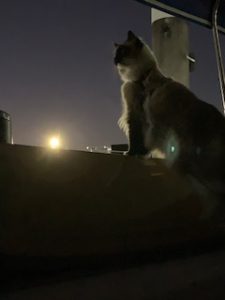
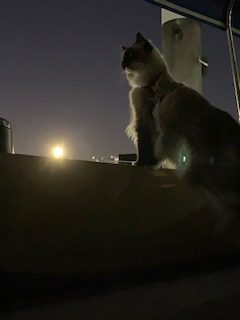
Zac exploring. He is looking out of the cockpit with the moon in the back ground.

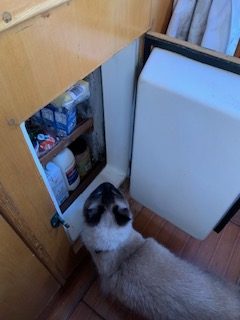
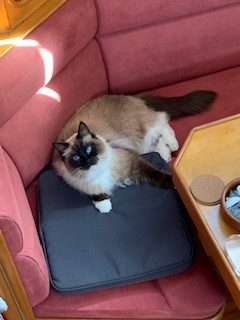
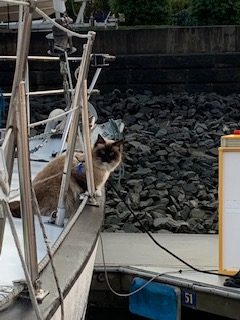
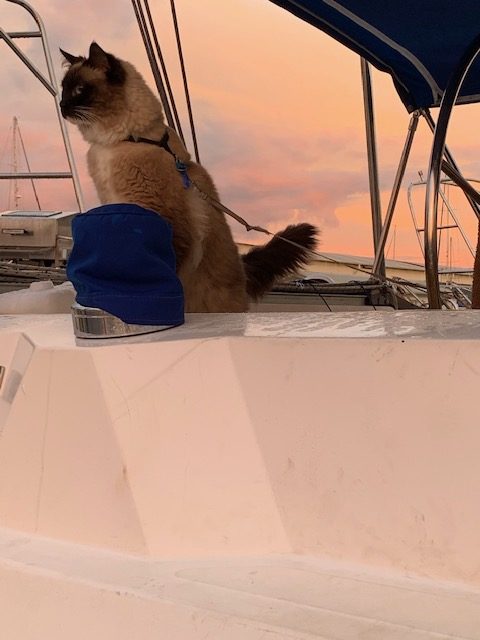
Probably the first significant transition moment for me was seeing Zac (our cat) explore and settle into the boat. I could feel my face break out into the hugest grin as he placed his paws on the edge of the cockpit and looked out. Not out of fear (certainly cautious) but out of curiosity. And I felt myself sigh with relief. We had spoken with the vet who had provided us with a stash of anti-anxiety tablets, which we only ended up using on the day we moved.

~

The second transition moment, in a way, had nothing and everything to do with living on the boat. It is symbolic of life changes. One of the reasons we purchased our first boat together was that Martin had had a serious race-bike accident that nearly killed him, resulting in a manic period in our lives starting with 3 hospitals in three days and 3 months in a wheelchair. It appeared as if he would not race again.

For someone that viewed himself as racer-boy, to be unable to race which he has done all his life has been difficult. Even more so when he had no choice but to retire from racing. In time, he recovered from all his injuries and gained pretty much full range in his knee, and so we bought our boat. In Martin’s mind he could now transition from being racer-boy to Captain Marty. Sailing has also been a serious passion of his. We loved our old boat but within 18 months we sold her and bought Saboteur.

Back to the track.

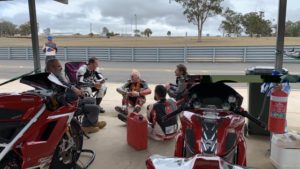
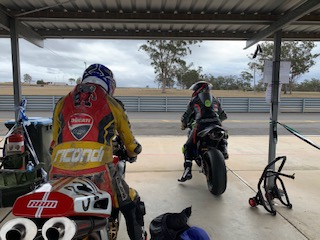
Marty and co in the pits at the race track

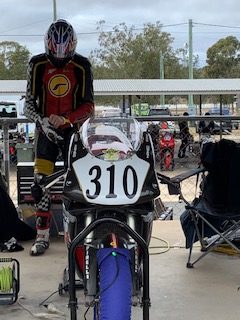
Martin was planning to do a track day with a mate. The last hoorah so to speak and had asked his mechanic to put new tyres on the bike and give it a service. His mechanic took a photo of Martin’s race bike and posted it online. Martin’s mates recognised it and started asking questions; “Is Marty back racing?” to which he shared that he is just doing a track day and then he received many beautiful comments from guys he raced with all over Australia. Some of the local guys (Ben LoweBrad LesueurKurt GraingerBarry Grainger booked in to ride with Marty on the track day) and the interstate guys (David James, Birdsey (Aka William Birdsey) and others) expressed their wish to be on the track with him once again. It was beautiful and brought tears to my eyes.

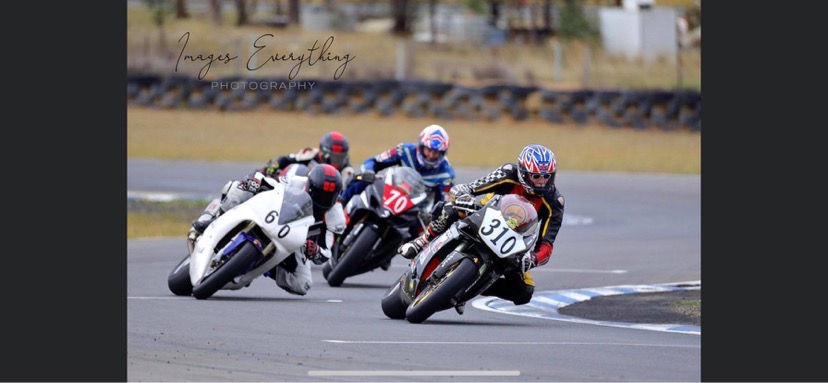
Marty, Kurk, Ben and Brad taking the corner 2 at Morgan Park.

You really don’t want your last memory of your last race to be being taken away in an ambulance.

A massive thank you to the paramedics and all medical staff who cared for him.

As well as Andrew Smart and his Ricondi Motorcycle Apparel for the airbag fitted leathers that help save his life.

He had not returned to the track (that track or any other track for that matter in 2 1/2 years). And so it was with great trepidation for me and a mixture of excitement and fear for Martin that we went back to the “scene of the crime”.

I was focused on minimising the voice in my head…

What if… he falls,
~ breaks a leg (I will put a bed in the shed and he can wheel himself to the amenities block! And I told him that!)
~ breaks his collarbone again (the Surgeon has told him he can not reconstruct it again. He has broken one collarbone four times and the other twice!)
~ and it delays our plans to sail…

I will be forever grateful that there were no falls and no broken bones.

I will be forever grateful to his friends that came and the conversations, stories and comradeship between great mates.

And then afterwards, the dialogue they shared in Messenger about how happy they were to be able to be on the track with him again, and what it meant to them.

Thank you to Ben, Kurt, Brad and Barry…

I am forever grateful.

And so Martin transitions from racer-boy to Captain Marty and he can turn his focus to new skills. If only Saboteur turned as easily as his race bike.

~

Another transition moment was Martin having a discussion with his boss and telling him we are not running away anytime soon and that he will give him three months’ notice. That feels right.

~

And finally for me, an unexpected transition moment has been falling in love with writing.

Over the past 11 months there have been almost 45 posts to our blog www.whatareyouwaitingfor.guru, and I have fallen in love with writing.

What was my worst nightmare at school (writing) is now my number 1 passion.

I get cranky when I don’t have time to write.

It has taken over my passion for painting. I have 3 unfinished paintings in the shed that I would like to finish before we set sail. Maybe I will, and maybe I won’t. I have a painting in a girlfriend’s studio that I will finish. Just to hang out with her again in her studio will be wonderful.

And so it is with Transitions, Time Warps and the occasional U-Turns,
we need to know what you are moving away from and
what you are moving towards.

In our case, it is not just a house to a boat, it is an identify shift as Marty transitions from racer-boy to sailor-boy, and I, corporate girl to sailor-girl.

And more than anything else, I am loving being a writer.

And there is still one unanswered question.

What if we can’t live together in a small space?

Will we still like each other…

#Ilovesailing #Whatareyouwaitingfor #liveyourlife #TandMadventures #ZacAdventures #Liveaboard #Liveaboardwithanimals #Transitions

It is now 10 days since we docked, and with this time comes an increasing appreciation for all that we have to be grateful for in life. 

Appreciation of the stunning sunset of Lamb Island
Sunset at Lamb Island

In my last post I said good night after a beautiful evening on deck with the sunset and the warmth of the shiraz as our companion, our bodies weary from the days work and happy for what we had achieved.

Permit me to take you back to the rest of our voyage to our new berth and base.

We were anchored in a very sheltered spot south of Lamb Island that was perfect for the weather conditions. 

We had let out about 10 meters of anchor chain. It is an imprecise science. I measure a meter by counting, one second, two seconds, three seconds, you get the idea. And then we paused (with the engine idling in reverse) for the anchor to take. It did not, so I let out another 5 meters, 1 second, 2 seconds, 3 seconds… We waited… The anchor takes and we checked to ensure that the current was pulling us back and the anchor held. We were happy. We set the anchor alarm for 30 meters. This alarm would go off if the boat moved outside of a 30-meter circumference. Bearing in mind that tidal movement would result in the boat turning 180 degrees twice during the night. I have full appreciation of modern technology such as “anchor apps”. We went to bed and crashed. We both slept well.

And then the anchor alarm dragged us from our deep sleep.

I blinked, listened and jumped out of bed all at the same time, while Martin’s extended arm went in search for his phone (the anchor alarm is a phone app). Our minds were rapidly waking from our sleep. I had put my left foot down first and as I transferred my weight to my right foot my leg collapsed; clearly my right leg was numb. ha, ha… now is not the time I told myself. My left arm lunged clinging to the bed as my body rose, supported by my left leg. I slapped my right leg and tried again, it collapsed again. This was to occur twice more before I had normal use of my right leg.

I was cautious going up the companionway (stairs). By this stage Martin had found the phone and checked the alarm. We had gone approximately a meter outside of the 30 meter circumference we had set. We checked the landmarks and our position against other anchored boats. I was certain we had not moved. As beautiful as it was in the stillness of the night our pillows called us back to bed…

We both feel back into a deep sleep, and then…

The anchor alarm went off again, albeit 6 hours later (tide change again). This time we both just sat and listened. We were convinced we were not moving. Martin checked the alarm and again we were just on a meter outside of the 30-meter circumference. We really should have set the alarm for 35 meters. Not to worry. Martin stayed in bed and I went up on deck and checked to ensure we had not moved and – we had not.

I had about 10 hours sleep and Martin 11 hours. I was full of appreciation for a brilliant night’s sleep. The birds were calling me to watch the sunrise. My spirits soared. I paused, embracing being in the moment with the crispness of the morning, the birds singing and in time the ferries transiting past us commuting people from Straddie (Stradbroke Island) and Lamb Island. Martin joined me in the cockpit. I think the wake of the ferry may have raised him.

It was a magical morning. 

Martin cooked up a protein feast, of fried egg served on a massive Swiss brown mushroom (one of my gluten free alternatives to bread) and some gorgeous air cured bacon. My Marty appreciation bubble is soaring. We cleaned up and checked our route. It was simple, head straight out of the channel turn left and we would be in the main channel to the Gold Coast. What could go wrong? Let’s face it, it would not be a TandM (Tessa and Marty) adventure without a hiccup or two.

My appreciation bubble was about to disappear for a couple of hours.

We hoisted our anchor right on low tide. We were chasing the low tide between sand banks and islands for the next two hours.

Our passage heading out from Lamb Island down the main channel.
Our passage!

We exited the channel, turned left and then had to decide which channel markers to follow. Meanwhile we had almost no clearance under our kneel. We argued, as we tried to make sense of the markers. We headed off on what we thought was right channel, and I became more and more convinced we were heading to a dead end. And then we ran out of water. We argued and turned around. It was our first U-Turn for the day.

We headed out to some slightly deeper water while we tried to make sense of the channels shown on the chart and the sea of buoys. It was so shallow and I was seeing sand banks everywhere. We turned around and headed back, only to run out of water again. We were using Martins phone for navigation (our navigation instruments were on their way still). Martins phone was fine, it was just small. The path it was showing looked like we were heading for a dead-end and sand. We turned around a third time. One of the nearby fishing dinghy’s picked up anchor and moved. Perhaps our arguing was scaring the fish away.

Finally I said to Martin; “You’re the skipper, go wherever you want”!

Martin cautiously headed down the transit lane marked on his phone… It turned out he was right (and I was wrong) Sorry baby.

When we finally passed this narrow passage, the rest of our journey was fine. We laughed because we recalled having the same argument, at the same point the last time we went down this passage on our previous yacht.

A little further on we gently weaved our way through some crowded anchorages off Horizon Shores and Jacobs Well. Eventually we found ourselves motoring down The Broadwater and then we hung a right at the entrance to the Coomera River and we were almost home. The tide was fast and the wind was now about 8knots and blowing in the wrong direction, which would make docking in our new berth at Gold Coast City Marina tough. It was kind of tight. I phoned ahead hoping to be able to book a pilot. Many marinas offer a pilotage service, where an experienced pilot will come out and take your boat in for you. Unfortunately, our marina does not. Bugger, we are on our own. Our boat is big (47 ft) and heavy (18 Tonnes) and with a full knell she is hard to turn in tight spots.

We entered the marina… fair to say, nervously…

We phoned the couple we rent the berth off. They said that they would be happy to grab a line for us. We had phoned our new neighbour Dan and asked him to put extra fenders on the outside of his boat in case we needed to “lean”  against it… as we approached our berth we needed to stay as far left in the channel as we could before turning right. Unfortunately, there was a houseboat at the end of the finger (in his usual spot) which limited how far left we could go. We turned, Martin did a good job of it. I was up the front ready to throw the line out to our ready catchers. I threw, the tide and wind was pushing us back and my line fell short. Clearly, more practice required.

Time was precious, letting the line trail in the water I turned and grabbed the pole and started to push off our neighbours boat.

We were starting to shout instructions at each other. And what happened next could only be describe as a comedy of errors. We managed somehow to get out of our pen without damaging our new neighbour’s boat and were attempting to reverse down the channel. We needed to turn our boat which steers in reverse poorly. By this stage, what is a normally a sleepy marina seemed like everybody had come out of hiding to welcome the inexperience newbies and, or more likely, to push us off their boats if required.

We heard a voice say, “If you can get over here, I will jump on board and help”.

There was no problems getting over there, the problem was stopping and before Gus could jump on board, he had taken on the task of pushing our boat off his and his neighbours. Meanwhile, Martin was trying to steer and I had been fending off boats. With the help of Gus we managed to turn the boat around and headed to the fuelling dock.

We were able to pause and consider the next move. I wondered how many people in the restaurant above us were watching and laughing – best not to think about it.

Our new friend Gus phoned a friend who could give us a hand. Despite the stress of the moment I can feel my appreciation bubble returning. Before we knew it, a young French couple joined us. Mona is a shipwright (boat builder) and Noah is a landscape gardener. They have been living on their boat for many years and are very experience sailors. By this time, my appreciation bubble has definately reappeared. I was grateful we had not damaged anyone else’s boat and full of appreciation for the assistance we had been offered.

After we had caught our breath, we readied ourselves to depart from the fuel dock and head out into the channel and turn around ready to try again.

We had hoped Mona would skipper, however she insisted Martin should take us in. Perhaps it was a voodoo thing. You know get back on the bike after falling off. While at this stage I was nervous about this, looking back I am full of appreciation for the wisdom of this decision. And so, with expertise we were guided into our pen. We were prepared to fend off our neighbours boat (just in case). We had awesome line handlers who made light work of securing us to the dock. Pretty much at the same time some friends arrived. They missed the entertainment. Probably just as well. 

Full appreciation of docking without damaging our neighbours boat.
Safely in our pen at GCCM

With Saboteur secured our friends and handlers settled into the cockpit. We cracked some beers and opened a couple of bottles of wine (19 Crimes Shiraz to be precise). Gus told me, I was pretty good with the fender, I knew where to put my feet, how to balance and when to let insurance take care of it… My years of martial arts helped.

And so we shared stories with our friends old and new, stories about life and doing what we love… despite the dramas of the day, and knowing we need to learn how to turn the 18 tonnes of boat better, we are thrilled to be on our journey. I am full of appreciation for old friends and new…

What are you waiting for? What’s your next adventure… even if you don’t know how?

#Whatareyouwaitingfor #Liveyourlife #Appreciation #Ilovesailing

With deadlines looming our schedule is ever changing… We are two weeks behind on schedule version 1,099…

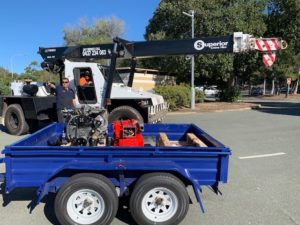
Pushing deadlines it was great to finally see this image our engine on the trailer and the crane to host her onto the boat.
New Engine and reconditioned GenSet

Week starting 25 May 2020 (this week):
• engine craned in – tick – crazy happy dance
• engine gets connected and other bits and pieces… almost finished.

Week starting 1 June 2020 (next week)
• new inverter, batteries and electrical checks – (OMG done a week early… unbelievable… another happy dance)
• new sail installed (or the week after)

And with a new sail and the rigging will we need to do what is called a “sea trial” to ensure it all works as expected… Seriously running out of time. We are feeling the pressure of multiple deadlines.

We have planned to be moving onto the boat this weekend. However, the interior is still in a million pieces. OK I exaggerate… 999 pieces… You get the idea.

Meanwhile back at the ranch we are both working too many hours and are still swimming in a sea of books, shoes and bits and pieces that are no longer supported by furniture… i.e. it is all on the floor.

Back to our schedule or reschedule…

We have had to reschedule the pet sitter. He was meant to be looking after the animals this weekend while we were moving the boat to the Gold Coast. We rescheduled him to the following weekend. However, Bill Fuller in case I forget to tell you, it may be the weekend after… or… sorry the deadlines keep changing.

We are getting a few questions about the animals. Moo and Nitro (the dogs) will be fine I have no doubt. Zac (the cat) on the other hand – well that remains to be seen. I spoke with the vet about sedating him. He recommended some anti-anxiety tablets instead and to try them out first. They worked at treat. Tick…

Our best-case scenario is now to be moving the boat to the Gold Coast the weekend 5 June…

Our worst case and last option is to be moving the boat to the Gold Coast the weekend of 12 June… Not ideal as we have a skip scheduled for the 12 June.

It will be worth it… we just need to get through the next 3 weeks.

And as the deadline approaches our stress levels are increasing with the diminishing timeline and so many activities in the hands of others. Mechanics, electricians, sail makers and… And, of course there is a domino effect…

#Ilovesailing #Whatareyouwaitingfor #Liveyourlife 

Jump into our Facebook page to see time-lapse videos of the crane lifting and lowering the engine through the cockpit, into the galley and into the engine bay.

Engine being craned in. https://www.facebook.com/tess.brook.5/videos/10158102310684435/

GenSet being craned in. https://www.facebook.com/tess.brook.5/videos/10158102314494435/

Getting the engine into position inside the boat. https://www.facebook.com/tess.brook.5/videos/10158116495059435/

Pin It